
Antibiotics and Your Pet's Gut: Where Probiotics Fit
How antibiotics disturb a dog's or cat's gut bacteria, why finishing the course still matters, what research says about probiotics during and after treatment, and how to space doses safely.
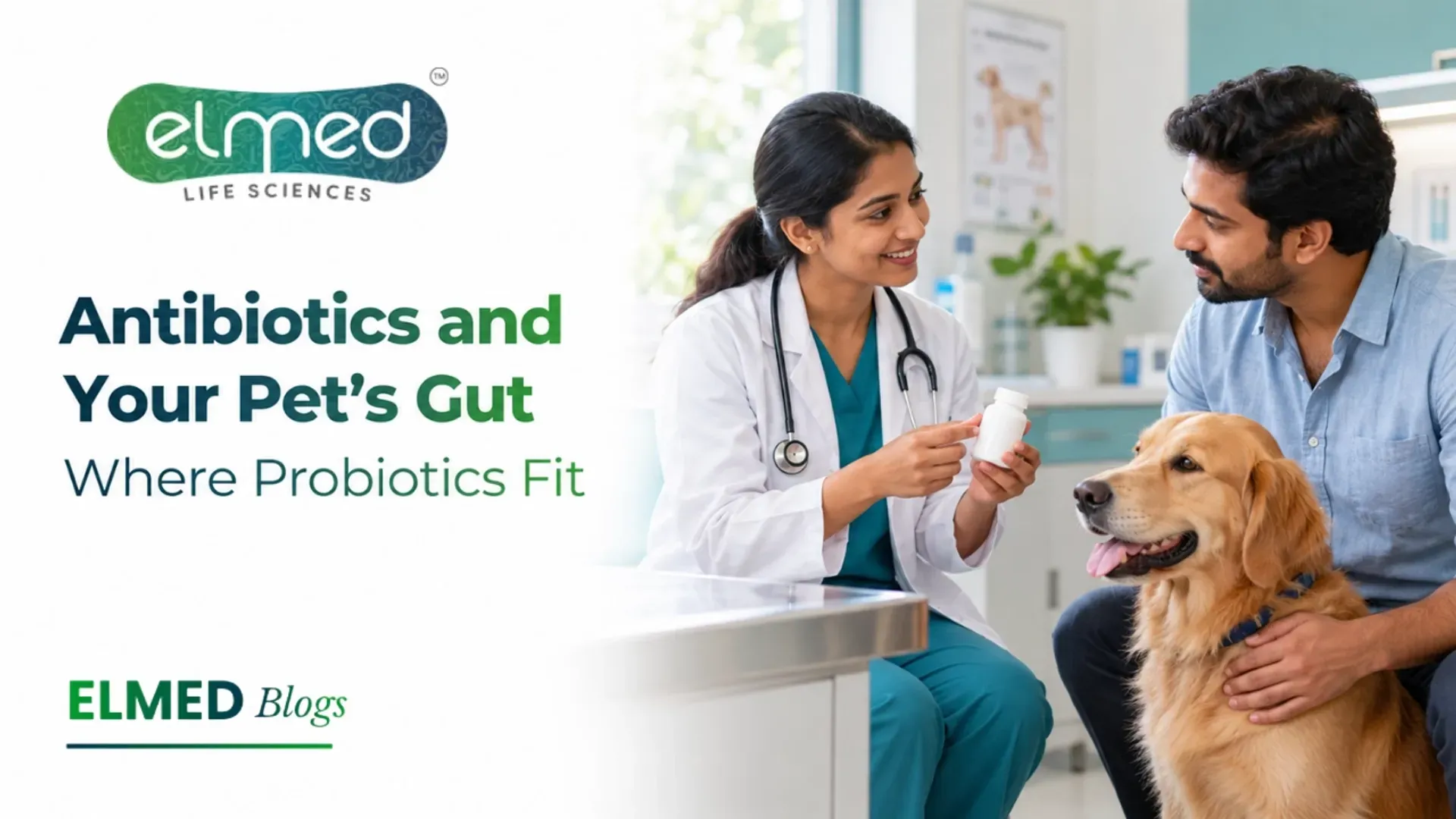


Antibiotics can save a pet's life, but they also reduce beneficial gut bacteria and can cause soft stools, vomiting or lost appetite. Studies in dogs show that some antibiotics change the gut microbiome for weeks. A probiotic is sometimes used alongside treatment, but evidence in pets is limited, and your veterinarian should guide timing.
Why do antibiotics upset the gut?
An antibiotic kills or slows bacteria, and it cannot distinguish disease-causing species from friendly ones. In the gut, this reduces diversity and shifts the balance of species. The consequences include fewer bacteria that make short-chain fatty acids, more room for opportunistic organisms to grow, and changes in bile acid processing.
Some antibiotics also irritate the stomach directly. Giving tablets or capsules without food can lead to nausea, drooling and vomiting.
Which antibiotics are most likely to cause gut upset?
Any antibiotic can. Broad-spectrum drugs and those with activity against anaerobic gut bacteria are more likely to disturb the microbiome. Metronidazole, clindamycin, tylosin, amoxicillin-clavulanate and some cephalosporins are among the drugs commonly linked with soft stools in pets. Your vet chooses a drug based on the infection, and the benefit of treating a serious infection usually far outweighs the risk of a temporary stomach upset.
What does research show about recovery?
In studies of healthy dogs given metronidazole, researchers found changes in gut bacteria and in the chemicals they make that persisted for weeks after the course ended, in some cases returning towards normal only after about a month. Findings from similar work with other drugs differ, and individual animals vary.
The practical point is that the gut may take time to settle after treatment, and that mild, short-lived soft stools can occur without meaning anything serious.
Do probiotics help during or after antibiotics?
In people, some probiotics reduce antibiotic-associated diarrhoea, and guidelines recommend certain strains for children. In pets, the evidence is thinner. Small studies of probiotics in dogs and cats have reported mixed effects on stool quality, and few have been designed specifically around antibiotic treatment.
Vets commonly consider probiotics a reasonable and low-risk supportive step for many animals, particularly when a pet has a history of gut upset on antibiotics. But they are not a proven fix, and they do not replace advice for a pet who is vomiting, has bloody stool or is unwell.
How should doses be timed?
Antibiotics can kill the bacteria in a probiotic. To reduce this, space the probiotic by two to three hours from each antibiotic dose, if your vet agrees. A yeast such as Saccharomyces boulardii is not affected by antibacterial antibiotics, which is a reason it appears in some pet products.
Probiotics are often continued for a short time after the course ends, but the best duration is not established. Your vet can advise for your pet.
What else helps during antibiotic treatment?
Give tablets with food unless your vet says otherwise, to protect the stomach.
Complete the whole course. Stopping early can allow resistant bacteria to survive, and it is not recommended unless your vet advises it.
Keep the diet steady. Avoid new foods and rich treats during treatment.
Watch for problems. Note stool, appetite and energy, and tell your vet about vomiting, bloody stool, rash, facial swelling or refusal to eat.
Do not use leftover antibiotics. Use only drugs prescribed for this pet and this illness.
Where does MAX360 fit?
MAX360 from ELMED Life Sciences is a synbiotic sachet for dogs and cats, with several probiotic species including Bacillus spores and the yeast Saccharomyces boulardii, plus FOS, digestive enzymes and vitamins. It is intended for daily gut support, and your veterinarian can decide whether to use it during or after antibiotics and how to time it. The wider guide is probiotics for dogs and cats.
When should you call your vet during treatment?
Call if your pet has persistent vomiting, bloody or black stool, diarrhoea that is severe or does not settle within a day or two, signs of an allergic reaction such as facial swelling or hives, or refuses to eat. Cats that stop eating for a couple of days need prompt veterinary attention.
Frequently Asked Questions
Explore More Articles
 Guide
How to Give a Probiotic Sachet to Your Dog or Cat
Practical steps for giving a probiotic sachet to a dog or cat: what to mix it with, how to handle fussy eaters, multi-pet homes, storage, timing with meals and medicines, and mistakes to avoid.
 Guide
Dog Diarrhoea: Causes, Home Care and When to Call the Vet
Why dogs get diarrhoea, how to tell small bowel from large bowel signs, what home care is reasonable, which human medicines are dangerous and which symptoms mean an urgent vet visit.
 Guide
Probiotics for Dogs and Cats: A Veterinary-Informed Guide to Daily Gut Support
A science-based guide for pet owners on probiotics for dogs and cats: how the pet gut works, what research shows, what a synbiotic sachet contains, how to give it and when to call your veterinarian.
Stay in the Loop
Get the latest probiotic industry insights delivered to your inbox.