
How to Give a Probiotic Sachet to Your Dog or Cat
Practical steps for giving a probiotic sachet to a dog or cat: what to mix it with, how to handle fussy eaters, multi-pet homes, storage, timing with meals and medicines, and mistakes to avoid.
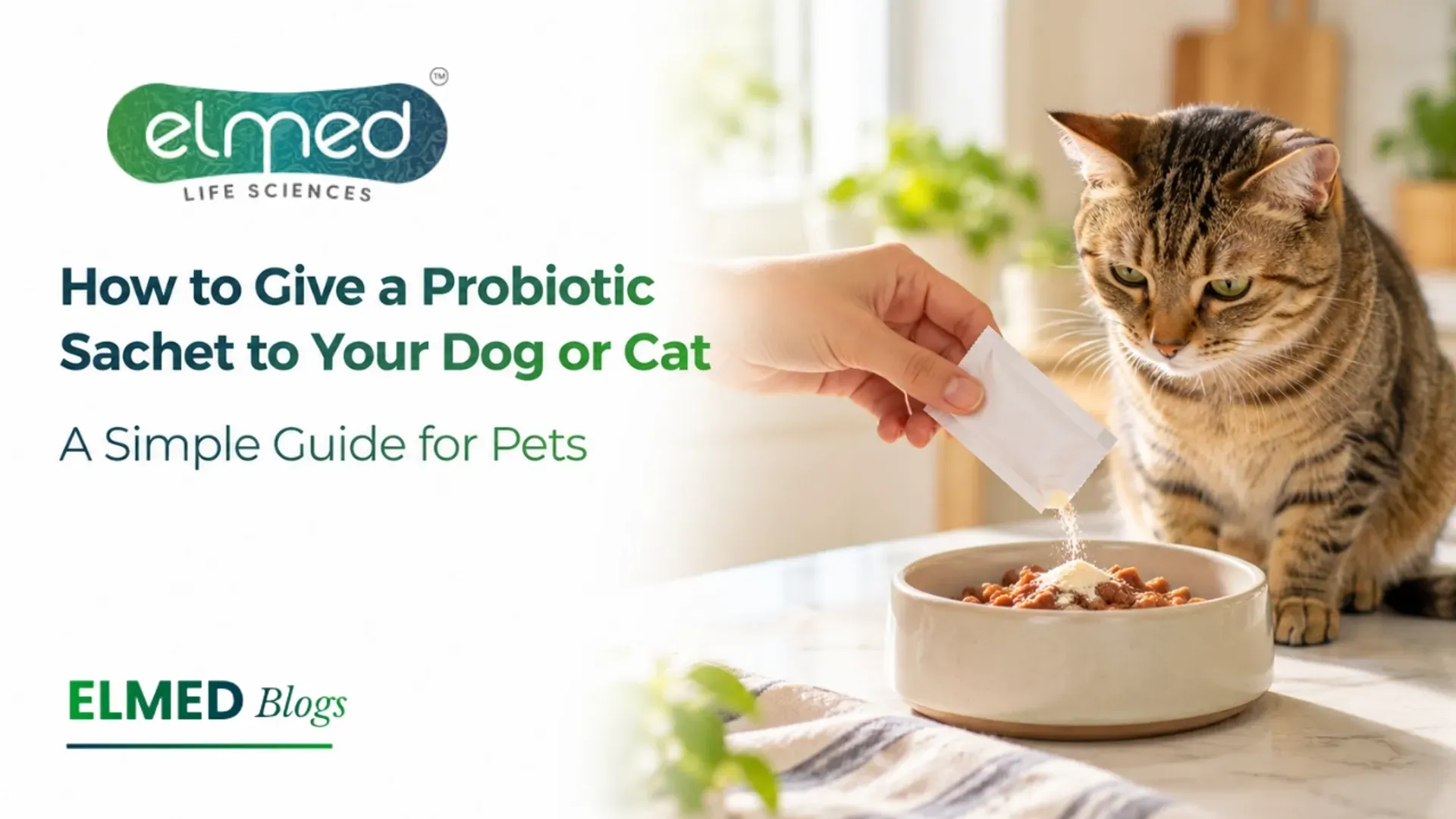


Mix the sachet into a small portion of your pet's regular moist food at a normal mealtime, stir it in well, and let your pet finish it before serving the rest. Use the amount shown for your pet's weight on the label or advised by your veterinarian, avoid hot food, and keep unused product sealed in a cool, dry place.
What do you need to know before starting?
Check the label for the serving guide by weight and for storage directions. Ask your veterinarian first if your pet is a young puppy or kitten, is pregnant or nursing, has a chronic illness, is on an immune-suppressing medicine, or has a medical device such as a catheter. If your pet is on antibiotics, ask about timing.
Pet sachets are single servings, so each one is opened and used at one meal. Do not save a part-used sachet for later.
What should the powder be mixed with?
Moist food works best. Wet food, home-prepared meals cooled to room temperature, or dry kibble moistened with a little room-temperature water all hold the powder so that it is eaten instead of left at the bottom of the bowl.
A few good choices:
- a spoonful of your pet's regular wet food
- a little plain, cooled boiled chicken and rice, if your vet has advised a bland diet
- a small portion of the pet's usual meal, with the rest served after it has been finished
Avoid hot food and drink, since heat harms live organisms. Do not mix the powder into a full bowl that may not be finished, since it makes the dose uncertain.
How do you handle a fussy eater?
Some pets sniff out anything new. The following steps help:
1. Start with a small portion of a favourite food and mix the powder in well.
2. Serve this portion first, when your pet is hungry, and give the rest of the meal only when it is finished.
3. If your pet refuses, try a different food it likes, or ask your vet whether another form would suit.
4. Do not hide powder in a pill pocket or treat without checking the ingredients.
Never force-feed powder or squirt it into the mouth, since a dog or cat can inhale powder and develop coughing or aspiration. If your pet refuses repeatedly, tell your vet.
What if you have several pets?
In a multi-pet home, feed pets separately for the mealtime when you give the sachet, so that the right animal eats the portion. Do not let a dog eat a cat's sachet portion or the reverse unless the product label allows it. Pets share bowls and eat each other's food quickly, and it can be hard to know who got the dose.
Cats should have fresh water available, and wet food adds fluid to their diet, which many vets value.
How much should you give?
Use the weight-based serving guide on the label or the instructions of your veterinarian. Do not double doses to make up for a missed day, and do not increase the amount because your pet has loose stools. A higher dose of a prebiotic such as FOS can cause gas and loose stools.
When should it be given?
Giving the sachet with a meal is easiest, and food buffers stomach acid. A regular daily time helps you remember. If your pet is taking an antibiotic, space the probiotic by two to three hours if your vet agrees. If your pet takes other medicines, ask your vet whether timing matters.
How should sachets be stored?
Keep sachets sealed in a cool, dry place away from heat, humidity and sunlight. Do not leave them in a hot car or in a bathroom. Store them out of reach of pets and children, since a pet that finds a pack could eat several sachets. If this happens, call your vet , who can advise on what to do. Always check the expiry date.
MAX360 from ELMED Life Sciences is a synbiotic powder for dogs and cats in single-serve sachets, mixed into regular food. The label's weight guide and storage instructions apply. The wider background is in the guide to probiotics for dogs and cats.
What mistakes are common?
Common errors include mixing into hot food, leaving a mixed bowl standing for hours, giving the sachet to the wrong pet, using human products that contain xylitol, skipping meals and giving the powder on an empty stomach in a pet that vomits easily, and stopping after a few days when mild gas appears. Mild gas usually settles in a few days. Persistent symptoms, vomiting, or any sign of illness are reasons to stop and call your vet.
Frequently Asked Questions
Explore More Articles
 Guide
Antibiotics and Your Pet's Gut: Where Probiotics Fit
How antibiotics disturb a dog's or cat's gut bacteria, why finishing the course still matters, what research says about probiotics during and after treatment, and how to space doses safely.
 Guide
Dog Diarrhoea: Causes, Home Care and When to Call the Vet
Why dogs get diarrhoea, how to tell small bowel from large bowel signs, what home care is reasonable, which human medicines are dangerous and which symptoms mean an urgent vet visit.
 Guide
Probiotics for Dogs and Cats: A Veterinary-Informed Guide to Daily Gut Support
A science-based guide for pet owners on probiotics for dogs and cats: how the pet gut works, what research shows, what a synbiotic sachet contains, how to give it and when to call your veterinarian.
Stay in the Loop
Get the latest probiotic industry insights delivered to your inbox.