
Probiotics for Dogs and Cats: A Veterinary-Informed Guide to Daily Gut Support
A science-based guide for pet owners on probiotics for dogs and cats: how the pet gut works, what research shows, what a synbiotic sachet contains, how to give it and when to call your veterinarian.
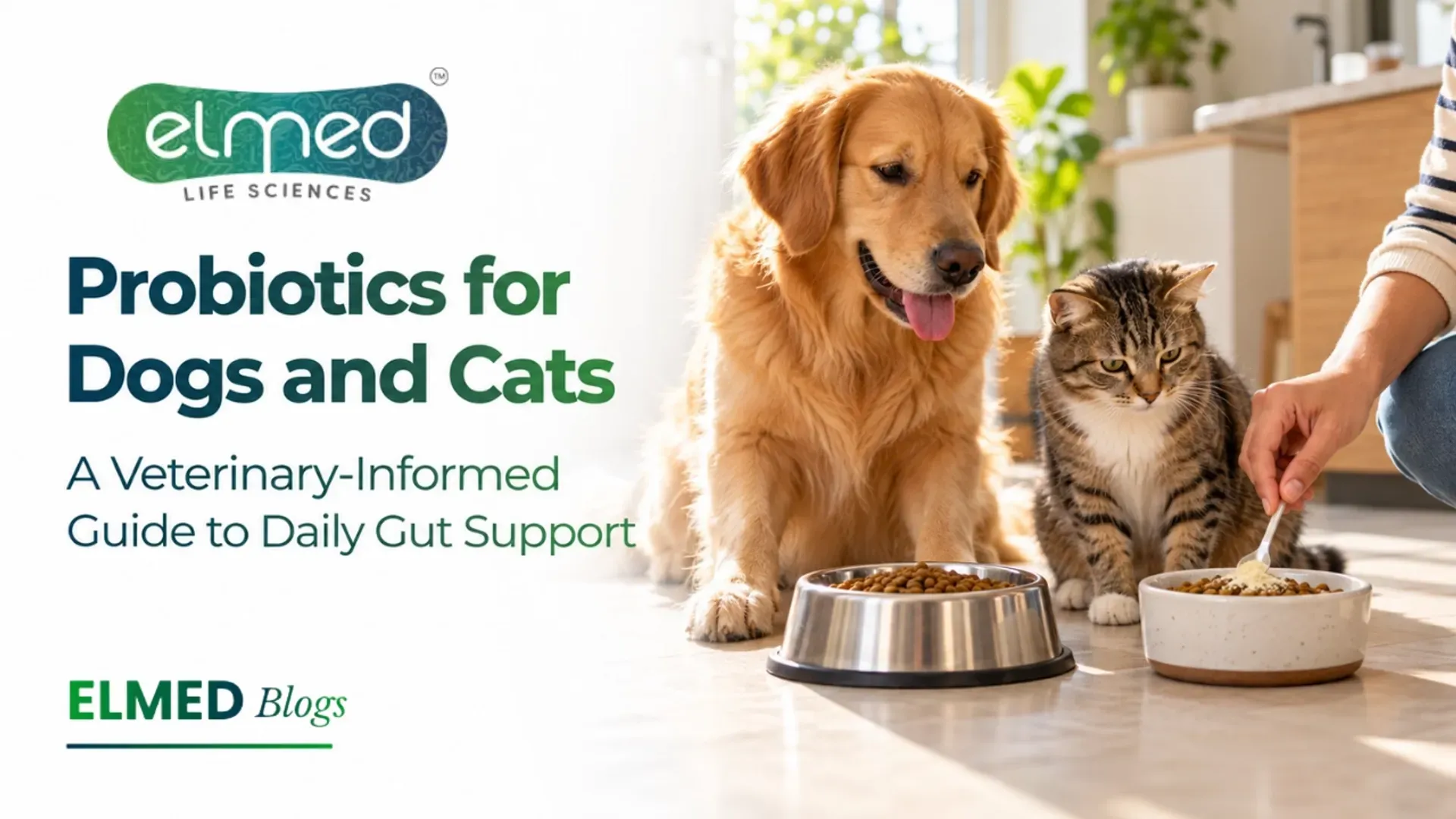


A probiotic for dogs and cats is a supplement of live beneficial microbes, usually mixed into food, that is meant to support digestion and a balanced gut. The research in pets is real but smaller and more mixed than most owners expect. Results depend on the strain, the pet and the problem, so a probiotic works best as a daily support alongside good food, and not as a substitute for your veterinarian.
This guide explains how a pet's gut works, what probiotics, prebiotics and enzymes are, what studies in dogs and cats have actually found, how to use a sachet, and which signs mean it is time to call your vet.
How does the gut of a dog or cat work?
A pet's digestive system is built for a diet that is different from ours. Dogs are omnivorous carnivores that cope with meat, fat and a moderate amount of plant material. Cats are obligate carnivores. They need animal-derived nutrients such as taurine and arachidonic acid, and they digest plant starch less efficiently.
Food passes through the stomach, which is very acidic in both species, into the small intestine, where most digestion and absorption take place. The large intestine is shorter than in people. It holds a dense community of microbes that ferments whatever is left, produces short-chain fatty acids that feed the cells of the colon lining, and helps control the growth of harmful bacteria.
Transit is quicker than in humans. Food takes roughly a day or two to pass through a dog, so a change in diet or a stomach upset shows up in stools quickly.
What is the pet gut microbiome?
The gut microbiome is the community of bacteria, fungi, viruses and other microbes living in the intestine. In healthy dogs and cats, the large intestine is dominated by groups such as Firmicutes, Bacteroidetes, Fusobacteria, Actinobacteria and Proteobacteria. Cats and dogs differ in the mix, reflecting their diets, and individual animals differ too.
The microbiome influences digestion, immune development and resistance to infection. It develops in the first weeks and months of life, changes with weaning, diet and age, and can be disturbed by illness, stress, parasites and antibiotics. A stable, diverse microbiome is associated with healthy digestion, though researchers do not yet agree on a single definition of an ideal one.
Why do dogs and cats get an upset stomach?
Common reasons include:
- a sudden change in food
- eating something unusual, such as garbage, bones, grass or table scraps, which vets call dietary indiscretion
- stress from travel, boarding, a new home or a new pet
- intestinal parasites such as roundworms, giardia and coccidia
- viral or bacterial infections
- antibiotics and some other medicines
- food intolerance or allergy
- older age and chronic conditions
Some of these resolve on their own, and some are serious. The article on dog diarrhoea: causes, home care and when to call the vet sets out how to tell them apart.
What are probiotics, prebiotics and synbiotics?
A probiotic is a live microorganism that, in adequate amounts, gives a health benefit to the host. For pets, the products usually contain lactic acid bacteria such as Lactobacillus and Enterococcus, bifidobacteria, spore-forming Bacillus, and sometimes the probiotic yeast Saccharomyces boulardii.
A prebiotic is a food component that feeds beneficial gut microbes. Fructooligosaccharides (FOS) and inulin are common examples. A synbiotic combines both. These terms are explained further in ELMED's article on prebiotics, probiotics and synbiotics.
Digestive enzymes, which break down starch, protein and fat, are sometimes added to supplements as well. Their role is described in prebiotics, FOS and digestive enzymes in pet supplements.
Do probiotics work in dogs and cats?
The honest answer is that some do, for some problems, in some animals. The studies are fewer and smaller than in people, and many use particular veterinary products, so results cannot be applied to every supplement.
Shelter animals. A well-known crossover trial tested the probiotic Enterococcus faecium SF68 in shelter cats and dogs. In dogs, it made no significant difference to diarrhoea. In cats, overall diarrhoea did not differ either, though diarrhoea lasting more than two days was less common with the probiotic. The authors suggested possible benefit, but the evidence was modest.
Diarrhoea in dogs. Several small trials in dogs with acute diarrhoea have reported shorter episodes or firmer stools with certain probiotics, and others found no difference. Veterinarians view probiotics as a reasonable adjunct, not as a treatment that replaces diagnosis and fluids.
Chronic gut disease. In dogs with inflammatory bowel disease, small studies of certain probiotic mixtures have reported improvements in some measures, but probiotics do not replace medication and diet changes prescribed by your vet.
Skin and allergy. A small study gave Lactobacillus rhamnosus GG to puppies from atopic parents and reported lower allergen-specific antibody levels later in life. This is early work and the findings are limited.
Cats. There are fewer studies in cats than dogs, and strain-specific evidence is thinner.
Because strains differ, a trial of one product tells you little about a different one. For this reason, the best question to ask about any pet probiotic is what evidence exists for the specific strains in that product.
Are multi-strain products better?
Multi-strain products aim to cover several parts of the gut and offer more than one mechanism. Lactic acid bacteria tend to act in the small intestine and colon, bifidobacteria in the colon, and spore-forming Bacillus survive acid and heat well. Saccharomyces boulardii is a yeast that is not killed by antibacterial antibiotics.
Whether combining strains gives better results in pets has not been established. A product with many strains is not automatically better than a single, well-studied one. What counts is that each strain is identified, and that the product delivers a stated number of live organisms until the expiry date.
What is MAX360?
MAX360 from ELMED Life Sciences is a premium synbiotic for dogs and cats, supplied as 1 g single-serve sachets with an 18-month shelf life. It is described as a multi-strain formula providing 2 billion CFU per gram. The organisms listed are Bacillus coagulans, Bacillus subtilis, Lactobacillus acidophilus, Lactobacillus plantarum, Lactobacillus casei, Bifidobacterium bifidum, Bifidobacterium longum, Enterococcus faecium and the probiotic yeast Saccharomyces boulardii. It also contains the prebiotic FOS, digestive enzymes and vitamins, and it is mixed into the pet's regular food for daily gut support.
ELMED markets it as vegan and gluten-free. The strain codes, the enzymes and vitamins used, and the weight-based serving guide are given on the product label and should be followed. MAX360 is a nutraceutical supplement meant to support digestion and gut balance. It is not a medicine and does not treat disease.
What does each ingredient group do?
Bacillus spores. Spores survive stomach acid and storage well. They germinate in the intestine and may add enzymes and competition for nutrients, though how long they stay is limited.
Lactobacillus and Bifidobacterium. These lactic acid producers lower local pH and are the best-known probiotic groups. Persistence is temporary and is mostly detectable while they are being given.
Enterococcus faecium. A lactic acid bacterium used in veterinary products, including a strain tested in the shelter trial described earlier. Strains differ, so the species name alone does not tell you whether a product's strain has that evidence.
Saccharomyces boulardii. A yeast used in people and animals for diarrhoea, and not affected by antibacterial antibiotics.
FOS. Prebiotic fibre that feeds bifidobacteria and lactobacilli. High amounts can cause gas and loose stools, which is why dose matters.
Digestive enzymes. Proteins that help break down food. Healthy pets make their own, so supplements are of uncertain benefit for most animals. They matter medically only in conditions such as exocrine pancreatic insufficiency, which needs veterinary diagnosis.
Vitamins. B vitamins such as thiamine (B1) and pyridoxine (B6) are water-soluble and involved in energy metabolism. Complete pet foods already supply them in adequate amounts, so a supplement adds only a little.
What about claims of a shinier coat and healthier skin?
Some pet probiotic marketing promises skin and coat benefits. The reasoning is that gut health and immune function influence the skin, and that better nutrient absorption helps coat quality. Evidence for a direct effect from a probiotic is limited. Coat and skin depend mainly on diet quality, fatty acid intake, parasite control, grooming and underlying disease. A dull coat or itchy skin deserves a veterinary check, since fleas, allergies and thyroid or other diseases are common causes.
Can probiotics help with stress, travel or boarding?
Stress is a well-known trigger for soft stools in dogs and cats, and owners often ask about probiotics before boarding, travel or a move. A few studies have looked at stress-related diarrhoea in dogs, with small and mixed effects. A probiotic may be a reasonable part of a plan, but it works best alongside practical steps such as keeping food consistent, using familiar bedding, allowing gradual introductions and avoiding sudden diet changes.
How does your pet's diet shape the microbiome?
Diet is the strongest influence on gut bacteria in dogs and cats, as in people. High-protein diets favour bacteria that ferment protein, and higher-fibre diets favour fibre fermenters. A sudden switch disturbs the community, which is why vets advise changing food over about a week by mixing increasing amounts of the new food with the old.
Raw diets are popular with some owners, but they carry a recognised risk of Salmonella, Campylobacter and other pathogens for pets and for the people who handle the food. Speak to your vet before choosing one. Whatever the diet, a complete and balanced formula suited to the animal's age, size and health forms the base on which any supplement sits.
What about puppies, kittens and older pets?
Puppies and kittens are developing their gut microbiome and immune system, and are more prone to diarrhoea, parasites and infections. Their digestive upsets can become emergencies quickly. Any supplement in a young animal should be discussed with your vet, and vaccination and deworming schedules matter much more than a probiotic.
Older pets may have reduced digestive efficiency, dental problems that limit what they eat, and chronic conditions such as kidney or heart disease. Appetite changes, weight loss and new bowel habits in older pets should be checked by a vet and not assumed to be ageing. A supplement can sit alongside veterinary care but does not replace it.
How should you give a probiotic sachet to a pet?
Mix the contents of the sachet into a small portion of your pet's usual food, ideally moist food or food moistened with a little room-temperature water, and offer it at a normal meal. Mix it in well so that the powder is eaten. Do not add it to hot food, which can harm live organisms. If your pet is a fussy eater, put the powder into a small amount that will certainly be finished, and then serve the rest.
Follow the weight-based serving guide on the label, or the amount your veterinarian advises. A step-by-step guide is in how to give a probiotic sachet to your dog or cat.
What should you expect, and how long should a trial last?
Many pets show no obvious change, which is normal for a daily support product. A few get mild gas or looser stools for a few days at the start. A fair trial lasts two to four weeks, with a simple record of stool quality, appetite, energy and any vomiting. Vets often use a seven-point faecal scoring chart, where firm, moist, easily picked up stool is ideal.
If your pet's digestion has not improved, or has become worse, after a few weeks, speak to your veterinarian rather than adding more products.
Is it safe to give a probiotic to a dog or cat?
Probiotics used in pets have generally been well tolerated in studies, with gas and soft stools the commonest complaints. A few precautions apply.
Very young, very old or unwell animals. Kittens and puppies can dehydrate quickly. Animals with serious illness, low immunity, indwelling catheters or those on immune-suppressing drugs should only receive a probiotic on veterinary advice.
Human probiotic products. Some products made for people contain xylitol, a sweetener that is highly toxic to dogs. Always check the ingredient list, and do not give human products without checking with your vet.
Medicines. If your pet is on antibiotics, ask your vet about timing. Separating probiotic and antibiotic doses by two to three hours is common advice.
Allergies. Check ingredients for anything your pet is known to react to.
Pregnant or nursing animals. Ask your veterinarian first.
When should you call your veterinarian?
Do not wait and watch if your pet has:
- blood in the stool or black, tarry stool
- repeated vomiting or vomiting with diarrhoea
- diarrhoea lasting more than 24 to 48 hours in an adult, or any diarrhoea in a young puppy or kitten
- lethargy, weakness or pale gums
- a swollen or painful belly
- refusal to eat for more than a day, especially in cats
- signs of dehydration, such as dry gums or skin that stays up when gently pinched
- known or possible ingestion of a toxin, such as chocolate, grapes, onions, medication or antifreeze
Cats that stop eating for even two days are at risk of a dangerous liver condition, so cats need prompt attention. Parvovirus and other serious infections are a particular danger in unvaccinated puppies.
How can you judge the quality of a pet probiotic?
Quality in pet probiotics is more variable than owners assume. A study of 19 commercial dog and cat foods that claimed to contain probiotics found that none contained all the organisms listed on the label, and several had no relevant growth at all. That finding is old, and products have improved, but it shows why checking matters.
Look for strain-level identification, a CFU count that is guaranteed through the expiry date, a clear serving guide by weight, species-specific labelling for dogs and cats, storage directions, a batch number and expiry, and a GMP Certified manufacturer. The article on how to judge a pet probiotic: label, strains and quality checks has a checklist.
Key takeaways
- A probiotic is a daily support for a pet's gut and not a treatment, and research in dogs and cats is smaller and more mixed than in people.
- Effects depend on strains, so ask what evidence exists for the strains in the product.
- MAX360 combines several named probiotic species, FOS, enzymes and vitamins in a 1 g sachet that is mixed into food, with doses taken from the label's guide.
- Check labels for xylitol in human products, ask your vet about timing with antibiotics, and keep records of stool and appetite.
- Blood in the stool, repeated vomiting, lethargy or illness in a puppy or kitten need your veterinarian, not a supplement.
Frequently Asked Questions
Explore More Articles
 Guide
Antibiotics and Your Pet's Gut: Where Probiotics Fit
How antibiotics disturb a dog's or cat's gut bacteria, why finishing the course still matters, what research says about probiotics during and after treatment, and how to space doses safely.
 Guide
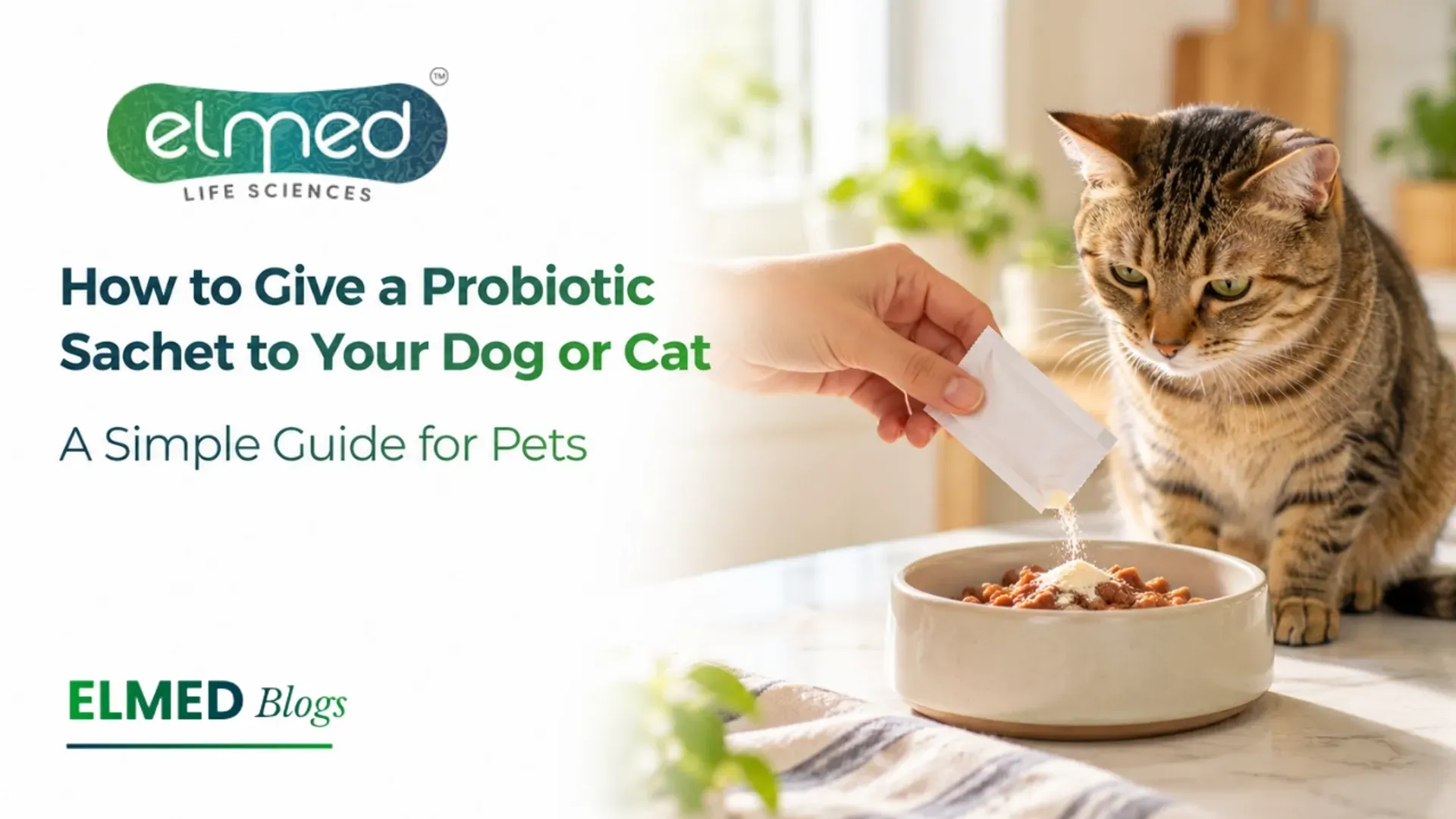
How to Give a Probiotic Sachet to Your Dog or Cat
Practical steps for giving a probiotic sachet to a dog or cat: what to mix it with, how to handle fussy eaters, multi-pet homes, storage, timing with meals and medicines, and mistakes to avoid.
 Guide
Dog Diarrhoea: Causes, Home Care and When to Call the Vet
Why dogs get diarrhoea, how to tell small bowel from large bowel signs, what home care is reasonable, which human medicines are dangerous and which symptoms mean an urgent vet visit.
Stay in the Loop
Get the latest probiotic industry insights delivered to your inbox.