
Prebiotics, FOS and Digestive Enzymes in Pet Supplements
What FOS, other prebiotics and digestive enzymes do in dog and cat supplements, how much evidence there is, which pets need enzymes for medical reasons and what B vitamins add.
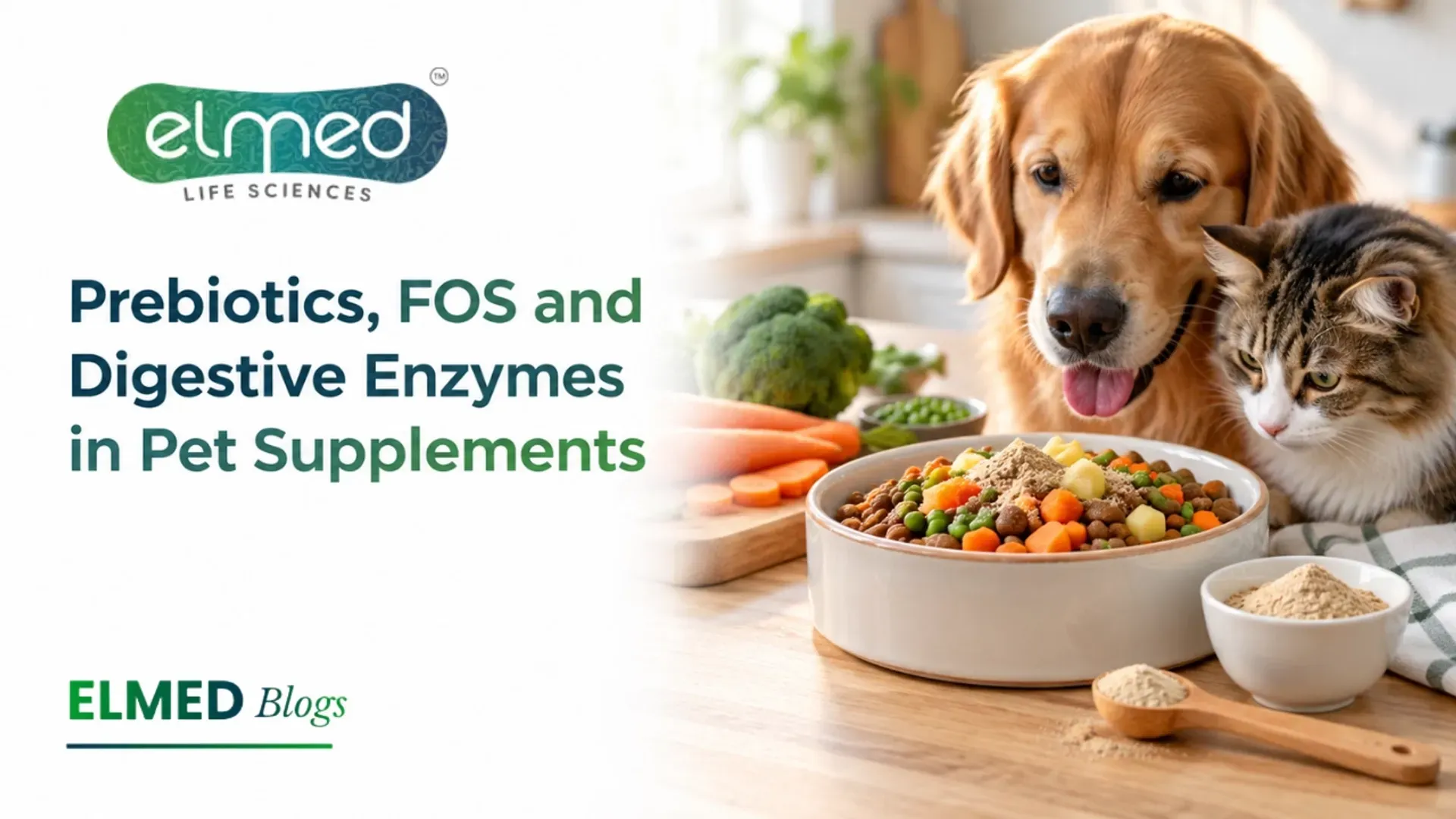


Prebiotics such as fructooligosaccharides (FOS) feed beneficial gut bacteria, and in studies of dogs they shift the microbiome towards more bifidobacteria and lactobacilli. Too much causes gas and loose stools. Digestive enzymes help break down food, but healthy pets make their own, so supplements matter mainly for animals with a diagnosed enzyme shortage.
What is a prebiotic?
A prebiotic is a substrate that is selectively used by host microorganisms and gives a health benefit. In practice, prebiotics are fibres or carbohydrates that the pet cannot digest but gut bacteria can ferment. Common examples are FOS, inulin, galactooligosaccharides, mannanoligosaccharides (MOS) and beet pulp.
When bacteria ferment prebiotics, they produce short-chain fatty acids such as butyrate, acetate and propionate. These feed the cells that line the colon, lower the local pH and may support the gut barrier.
What does FOS do in dogs and cats?
FOS is a chain of fructose units found naturally in chicory, onions and some other plants. Studies in dogs, including controlled feeding trials, found that supplementing FOS raised numbers of beneficial bacteria such as bifidobacteria and lactobacilli and lowered some less desirable bacteria in the large intestine. Effects on health outcomes such as diarrhoea are less clear.
Research in cats is more limited, though FOS and related fibres have been used in cat diets and show similar changes in the gut.
Can too much FOS cause problems?
Yes. Rapid fermentation produces gas. At higher intakes, FOS can cause flatulence, soft stools, bloating and sometimes diarrhoea. Pet foods and supplements usually contain small amounts for this reason. If your pet gets looser stools after starting a synbiotic, reduce to the labelled dose, give it with food, and tell your vet if it continues.
What are digestive enzymes?
Enzymes are proteins that speed up chemical reactions. Pets produce amylase to digest starch, proteases to digest protein and lipase to digest fat, mainly from the pancreas. Supplements may add enzymes from fungi or plants, such as amylase, protease and lipase.
Do healthy pets need enzyme supplements?
Generally no. The pancreas has a large reserve, and healthy dogs and cats digest complete diets well. There is little evidence that adding enzymes improves digestion in healthy pets, though some owners report that stools or comfort improve. Any benefit is likely to be small.
When are enzymes medically needed?
Exocrine pancreatic insufficiency (EPI) is a condition in which the pancreas fails to make enough digestive enzymes. It occurs in dogs, particularly German shepherds and rough-coated collies, and less commonly in cats. Signs include weight loss despite a big appetite, greasy, bulky, pale stools, frequent passing of stool and sometimes eating faeces.
EPI is diagnosed by a blood test, and treated with prescribed pancreatic enzyme powder mixed into food, along with diet management and sometimes vitamin B12. It requires veterinary care. A general supplement is not a substitute.
What about vitamins B1 and B6?
B vitamins are water-soluble and involved in energy metabolism. Thiamine (B1) is important for cats, since deficiency causes serious nerve problems, and it can occur with diets high in raw fish, which contain an enzyme that destroys thiamine. Pyridoxine (B6) helps with protein metabolism. Complete pet foods contain enough of both. A supplement adds a small extra amount, and it does not correct an unbalanced diet.
Do pets need prebiotics if the food already has fibre?
Many complete diets already contain fermentable fibre, such as beet pulp, chicory root or inulin, so a supplement may add only a little. Cats need less fibre than dogs, and some cats with sensitive stomachs do better on low-fibre diets. Your vet can tell you whether extra prebiotic is worthwhile for your pet.
How does this relate to MAX360?
MAX360 from ELMED Life Sciences combines multiple probiotic species with FOS, digestive enzymes and vitamins in a 1 g daily sachet for dogs and cats. The enzyme types and amounts are given on the label . It is a general gut support product and is not a replacement for veterinary treatment of enzyme deficiency. The guide to probiotics for dogs and cats explains the wider evidence.
What should owners do?
Choose a complete and balanced diet suited to your pet's life stage. Introduce any supplement gradually. See your vet for weight loss, greasy stools, chronic diarrhoea, or a very large appetite with weight loss, instead of adding enzymes without a diagnosis.
Frequently Asked Questions
Explore More Articles
 Science
LGG Pili and Mucus Binding: How the Strain Attaches
How Lactobacillus rhamnosus GG attaches to gut mucus using SpaCBA pili, what the laboratory studies show, why attachment is only part of the story and what it does not prove.
 Science
LGG and Eczema Prevention: What the Finnish Trials Show
What the Finnish trials of Lactobacillus rhamnosus GG found for eczema prevention in at-risk infants, how the benefit held at two and four years, and why guidelines remain cautious.
 Science
LGG and Respiratory Infections in Day Care Children
A careful reading of the Croatian day care trial of Lactobacillus rhamnosus GG: what it measured, what it found for upper respiratory infections and why gastrointestinal results were null.
Stay in the Loop
Get the latest probiotic industry insights delivered to your inbox.