
LGG Pili and Mucus Binding: How the Strain Attaches
How Lactobacillus rhamnosus GG attaches to gut mucus using SpaCBA pili, what the laboratory studies show, why attachment is only part of the story and what it does not prove.
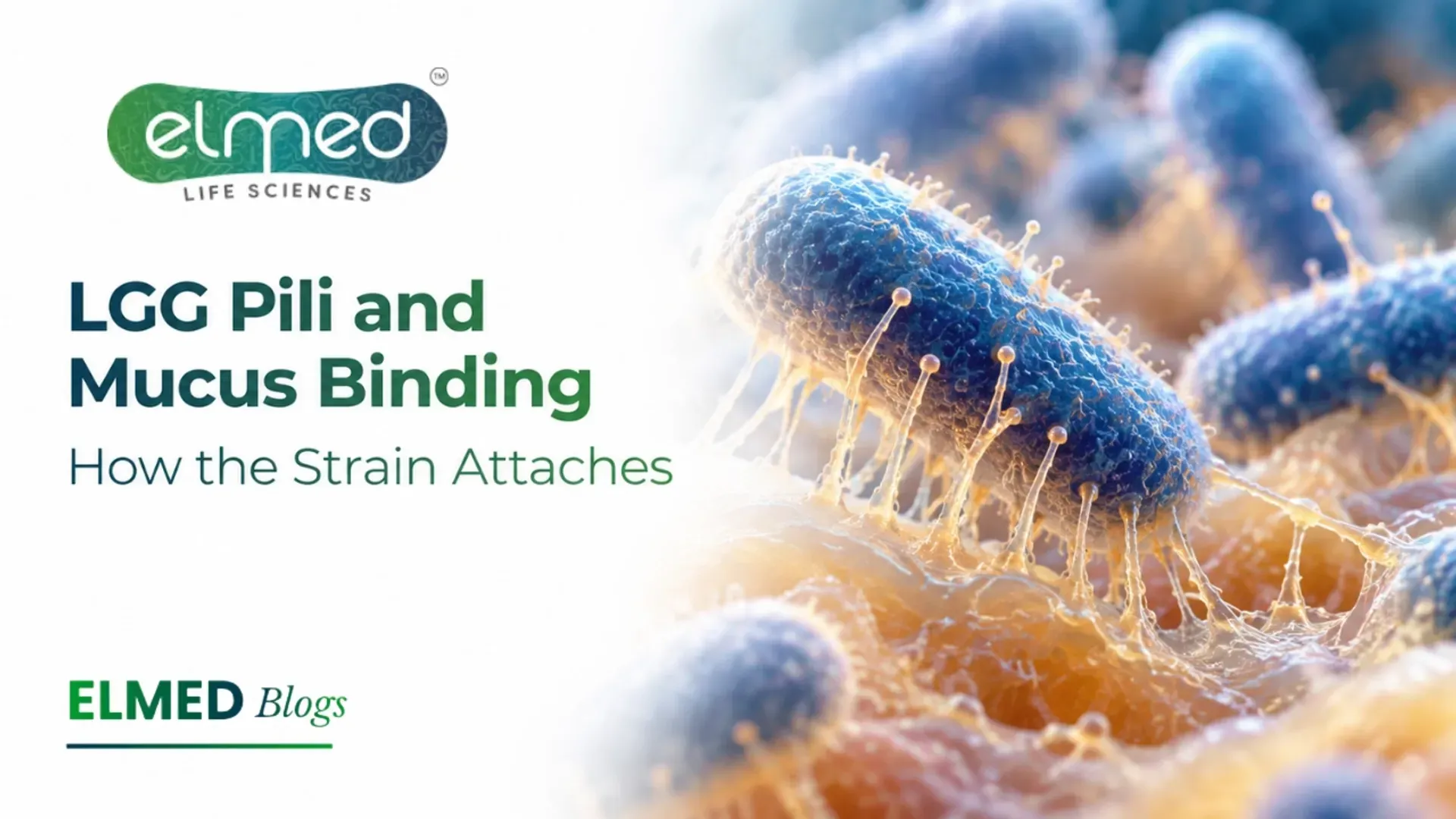


Lactobacillus rhamnosus GG carries hair-like surface structures called SpaCBA pili that bind to the mucus layer of the gut. This was shown in laboratory studies in 2009 and helps explain why LGG stays in the gut longer than many other lactobacilli. Attachment is a plausible mechanism for benefit, not proof of it.
Why does attachment matter for a probiotic?
The gut lining is covered by a layer of mucus, which acts as a barrier and as a home for resident bacteria. A probiotic that can stick to mucus may stay longer, interact more with the gut lining and compete with pathogens for attachment sites. A strain that passes straight through has less opportunity to do any of this.
Attachment is one of several properties used to screen probiotic candidates, along with survival in acid and bile, safety and the ability to grow in production.
What are pili?
Pili are thin protein filaments extending from the surface of some bacteria. Gram-negative bacteria such as E. coli use pili to attach to host cells and cause infection. Gram-positive bacteria, including lactobacilli, were not thought to have them until relatively recently.
In 2009, a Finnish and Dutch research group reported in the Proceedings of the National Academy of Sciences that LGG carries pili built from three proteins, named SpaA, SpaB and SpaC, which form a structure called SpaCBA. It was among the first reports of pili in a probiotic lactobacillus. The group found that the SpaC protein at the tip binds to mucus.
What did the laboratory studies show?
In experiments, LGG bound to human intestinal mucus, and the purified pili protein bound mucus on its own. Later work using mutant strains that lack pili reported weaker adhesion to intestinal cells and mucus.
Other work has shown that LGG pili interact with immune cells in culture and may influence signalling pathways in gut cells. Some of these effects are still being worked out.
LGG is also known to persist in the human gut for a limited time. Stool studies find LGG for days to a few weeks after dosing stops in many people, longer than for some other lactobacilli, which fits the attachment findings.
Do pili explain LGG's clinical effects?
Not by themselves. Attachment may help the strain persist and interact with gut tissue, but the link between pili and effects in people, such as shorter diarrhoea or fewer antibiotic -associated diarrhoea cases, has not been established directly. Clinical trials did not measure pili.
It is also worth noting that persistence is temporary. LGG does not usually colonise the gut permanently. Benefits seen in trials occurred during use.
Can pili be used to compare probiotics?
Not simply. Other lactobacilli carry similar pili genes, and some strains differ in structure. The presence of a gene does not show a clinical benefit. This is another reason why strain-specific, outcome-specific trials matter more than laboratory properties.
What does this mean for a LGG product?
For a family or clinician, laboratory findings such as pili add background and support the plausibility of the strain, but the decision to use LGG rests on clinical trials. Rhamnosus GG Sachets from ELMED Life Sciences list LGG ATCC 53103 at 6 billion CFU per sachet. The strain evidence by condition is covered in the guide to LGG probiotic sachets, and ELMED's article on Lactobacillus rhamnosus GG ATCC 53103 covers the strain's research history.
How does persistence compare between strains?
Stool studies in volunteers have shown that LGG can be recovered for several days after the last dose, and in some individuals for a few weeks. Other lactobacilli, such as many L. acidophilus strains, typically disappear faster. Persistence varies widely between individuals and depends on diet, gut transit and the resident microbiome.
Persistence is a useful sign that a strain can survive the gut and interact with it, but it does not measure benefit. Some effective probiotics are cleared quickly, and some persistent strains show no clinical effect.
What remains unknown?
Questions that remain open include whether pili expression varies with the product and growth conditions, how pili-dependent binding differs between people with different mucus compositions, and whether the effect can be measured and linked to outcomes in trials. Genomic work continues to refine these questions.
Frequently Asked Questions
Explore More Articles
 Science
Prebiotics, FOS and Digestive Enzymes in Pet Supplements
What FOS, other prebiotics and digestive enzymes do in dog and cat supplements, how much evidence there is, which pets need enzymes for medical reasons and what B vitamins add.
 Science
LGG and Eczema Prevention: What the Finnish Trials Show
What the Finnish trials of Lactobacillus rhamnosus GG found for eczema prevention in at-risk infants, how the benefit held at two and four years, and why guidelines remain cautious.
 Science
LGG and Respiratory Infections in Day Care Children
A careful reading of the Croatian day care trial of Lactobacillus rhamnosus GG: what it measured, what it found for upper respiratory infections and why gastrointestinal results were null.
Stay in the Loop
Get the latest probiotic industry insights delivered to your inbox.