
LGG and Antibiotic-Associated Diarrhoea in Children: What ESPGHAN Recommends
What the 2016 ESPGHAN recommendation says about Lactobacillus rhamnosus GG for preventing antibiotic-associated diarrhoea in children: the numbers, the doses, the limits and practical points.
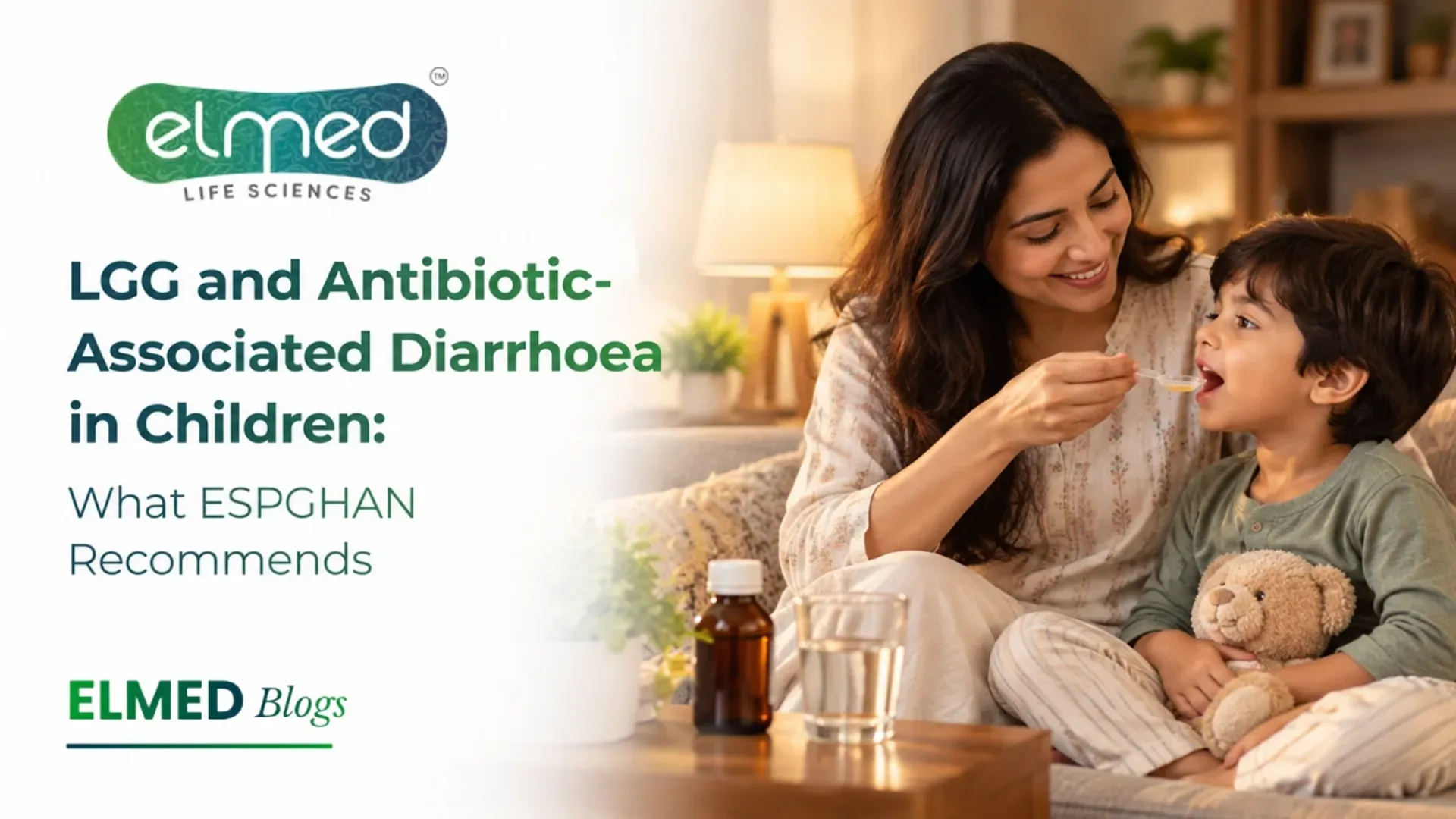


In 2016, a working group of the European Society for Paediatric Gastroenterology, Hepatology and Nutrition (ESPGHAN) strongly recommended Lactobacillus rhamnosus GG, or Saccharomyces boulardii, for preventing antibiotic-associated diarrhoea in children given antibiotics. For LGG, pooled trials showed the risk falling from about 23 percent to 9.6 percent. The group did not find that LGG prevented Clostridioides difficile infection.
What is antibiotic-associated diarrhoea?
Antibiotic-associated diarrhoea (AAD) is loose or watery stools occurring during or up to a few weeks after antibiotic treatment, with no other cause. It affects a notable share of children who take antibiotics, depending on the drug, with broad-spectrum agents such as amoxicillin-clavulanate and cephalosporins linked to more cases.
The cause is disturbance of the gut microbiome. Antibiotics reduce beneficial bacteria, alter fermentation of carbohydrates, and let other organisms grow. Some drugs, such as clavulanate, also directly stimulate gut movement. In a minority of cases, the cause is Clostridioides difficile infection, which is more serious.
What did ESPGHAN recommend?
The ESPGHAN Working Group on Probiotics and Prebiotics reviewed randomised trials and made these recommendations, published in 2016.
For AAD prevention. LGG was strongly recommended, with moderate-quality evidence. S. boulardii was also strongly recommended, with moderate-quality evidence.
For C. difficile-associated diarrhoea. S. boulardii was suggested, with low-quality evidence and a conditional recommendation. No recommendation was made for LGG.
Other strains and mixtures. Evidence was insufficient to recommend them.
The group required at least two randomised trials for a specific strain before recommending it, and stated that strains differ, so general statements about probiotics are inappropriate.
What were the numbers for LGG?
Five randomised trials with 445 children contributed to the LGG analysis. AAD occurred in about 23 percent of children given placebo and 9.6 percent of those given LGG, a relative risk of 0.48 with a 95 percent confidence interval of 0.26 to 0.89. The number needed to treat was 8, meaning about eight children would need to take LGG to prevent one case.
For comparison, S. boulardii showed a relative risk of 0.43 across six trials with 1,653 children, with a number needed to treat of 9.
What dose was used?
The optimal dose of LGG is unclear. In the ESPGHAN review, the largest effect, a 71 percent risk reduction, came from a trial using 10 to 20 billion CFU per day. Trials used a range of doses, and the review did not set a single recommended dose.
For families, this means the dose on a product label and the advice of the child's doctor should guide use. A higher number is not necessarily better, but a very low dose may lack the support that the trials give.
What did the review say about C. difficile?
Only one trial of LGG measured C. difficile-associated diarrhoea, and it showed no effect, with an extremely wide confidence interval because there were very few cases. ESPGHAN therefore did not recommend LGG for that purpose. If a child has severe or bloody diarrhoea during or after antibiotics, a doctor should test for C. difficile.
How should this be used in practice?
Use antibiotics only when needed. ESPGHAN noted that careful antibiotic use is the best prevention. Colds and most coughs are viral and do not need antibiotics.
Consider risk. Younger age, hospital stay, broad-spectrum antibiotics and long courses raise risk.
Start early. In most trials, the probiotic began with the antibiotic or within two days.
Separate the doses. Giving the probiotic two to three hours apart from antibiotic doses may reduce the chance of the antibiotic killing it.
Continue to the end of the course, and in some trials for a short time after, as advised by the doctor.
The group also advised caution in immunosuppressed, critically ill or otherwise vulnerable children, in whom safety was not formally assessed.
How does this relate to the sachets?
Rhamnosus GG Sachets from ELMED Life Sciences contain LGG ATCC 53103 at 6 billion CFU per sachet, described as paediatric-friendly from infancy . The doses in the studies behind the recommendation vary, so the number of sachets per day for a child should come from the label and the doctor. The wider evidence by condition is in the guide to LGG probiotic sachets.
What if the child already has diarrhoea?
Give oral rehydration solution, continue age-appropriate feeding, and seek advice for blood in the stool, high fever, repeated vomiting, signs of dehydration or diarrhoea lasting more than a few days. A probiotic is secondary to rehydration.
Frequently Asked Questions
Explore More Articles
 Science
Prebiotics, FOS and Digestive Enzymes in Pet Supplements
What FOS, other prebiotics and digestive enzymes do in dog and cat supplements, how much evidence there is, which pets need enzymes for medical reasons and what B vitamins add.
 Science
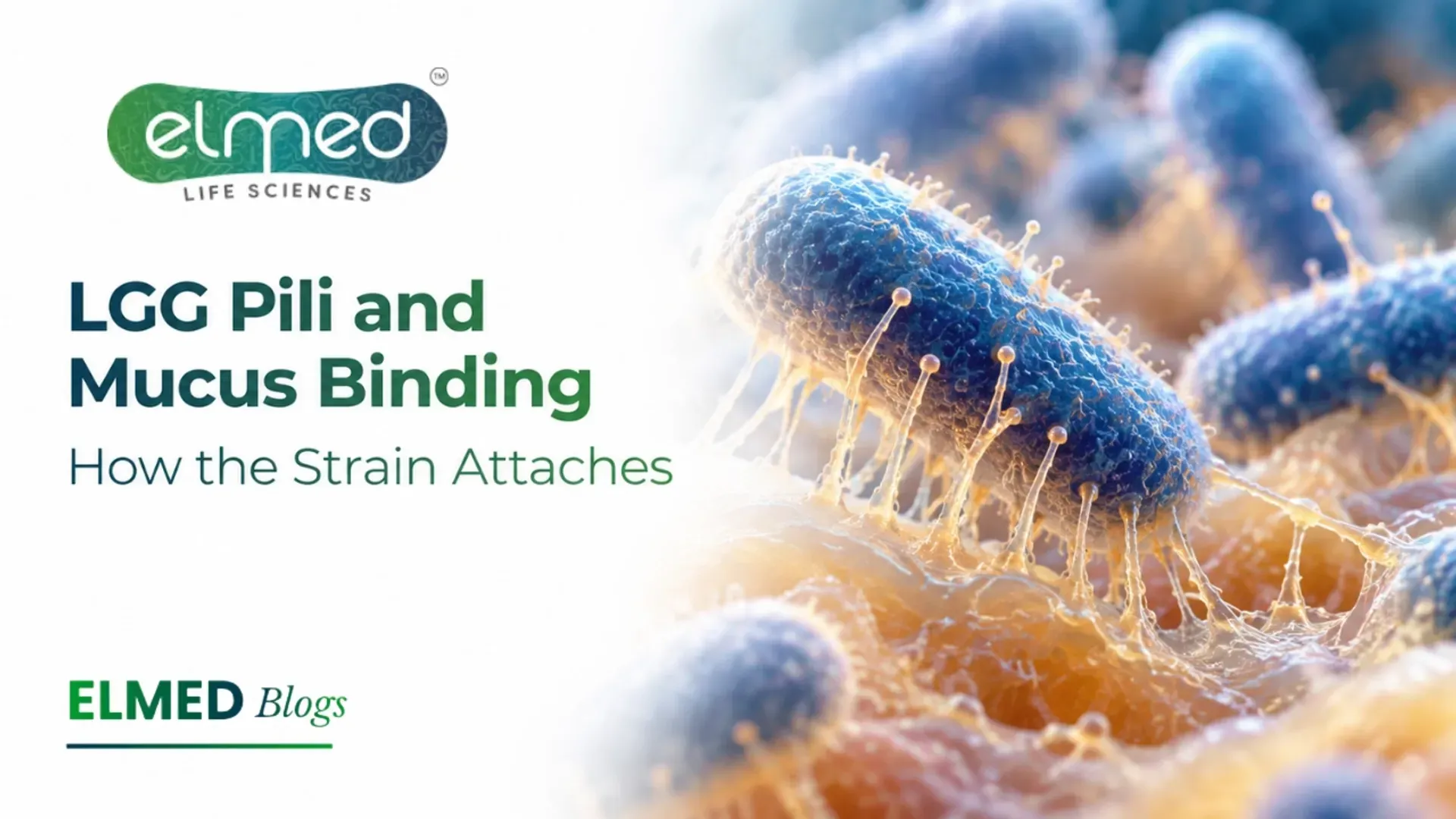
LGG Pili and Mucus Binding: How the Strain Attaches
How Lactobacillus rhamnosus GG attaches to gut mucus using SpaCBA pili, what the laboratory studies show, why attachment is only part of the story and what it does not prove.
 Science
LGG and Eczema Prevention: What the Finnish Trials Show
What the Finnish trials of Lactobacillus rhamnosus GG found for eczema prevention in at-risk infants, how the benefit held at two and four years, and why guidelines remain cautious.
Stay in the Loop
Get the latest probiotic industry insights delivered to your inbox.