
LGG and Eczema Prevention: What the Finnish Trials Show
What the Finnish trials of Lactobacillus rhamnosus GG found for eczema prevention in at-risk infants, how the benefit held at two and four years, and why guidelines remain cautious.
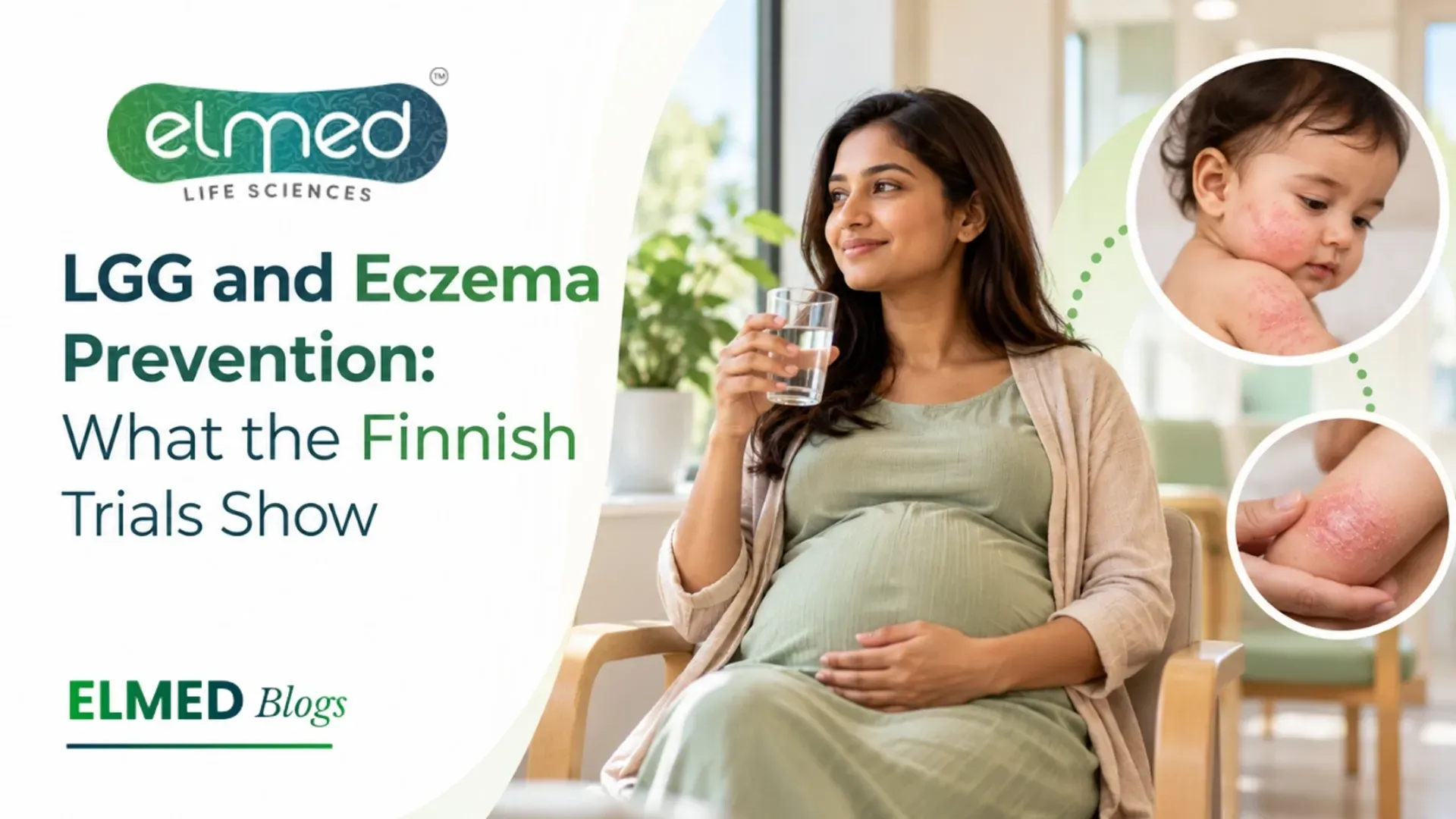


A randomised Finnish trial of Lactobacillus rhamnosus GG in families with allergy found that atopic eczema in children at two years was about half as common with LGG as with placebo, and that the advantage was still present at four years. Benefit did not extend to asthma or allergic rhinitis in follow-up. Later trials were less consistent, so guidelines remain cautious.
What is atopic eczema?
Atopic eczema, also called atopic dermatitis, is a chronic inflammatory skin disease with dry, itchy, red patches. It often begins in infancy and affects a notable share of children. It runs in families with allergic disease, such as eczema, asthma, hay fever and food allergy, and is linked to a leaky skin barrier and immune over-reactivity.
Prevention is attractive, because eczema can disturb sleep and quality of life, and may precede other allergic conditions.
How was the Finnish trial designed?
The trial was run in Turku, Finland, and reported in The Lancet in 2001 by Kalliomäki and colleagues. It enrolled 159 pregnant women whose families had a history of atopic disease, meaning eczema, allergic rhinitis or asthma in the woman, her partner or a first-degree relative.
Women were randomly assigned to LGG at 10 billion CFU per day or placebo, taken for two to four weeks before expected delivery. After birth, the supplement continued for six months, given to the mother if breastfeeding or directly to the infant. The infants were followed for allergy outcomes.
What did it find?
At two years, atopic eczema was about half as common in the LGG group as in the placebo group. This was the original result of the trial and attracted wide attention.
Follow-up continued. At four years, children in the LGG group were about 40 percent less likely to have atopic eczema. At that age, there was no protective effect on asthma or allergic rhinitis, though the researchers noted that respiratory allergy often appears later and could not be assessed fully.
What are the limits of the evidence?
Single trial, specific design. The result comes from one trial with a mother-then-infant dosing plan in high-risk families. It cannot be applied to every infant.
Size. With 159 families, the trial was modest in size. Effects in small trials often shrink on replication.
Later trials. Other randomised trials of LGG, and reviews pooling probiotics, have not reproduced the effect consistently. Findings vary by strain, timing and population.
Mechanism unclear. The trial showed an effect on eczema but did not explain how LGG might act , and the lack of effect on asthma and rhinitis suggests that it is not a general block on allergic disease.
What do guidelines say?
World Allergy Organization guidelines on probiotics for allergy prevention gave a conditional suggestion for using probiotics in pregnant women at high risk, breastfeeding mothers and infants at high risk, to reduce eczema, citing very low-certainty evidence. They did not name specific products. Other bodies have been more cautious, and many allergy societies do not routinely recommend probiotics for allergy prevention.
These positions reflect the variability of trial results, differences in strains and doses, and a lack of long-term data.
What about treating established eczema?
Evidence that probiotics treat existing eczema is weak. Reviews have found little or no consistent benefit. Treatment relies on moisturisers, avoiding triggers, topical anti-inflammatory medicines and specialist care for severe cases. A probiotic is not a substitute.
Is it safe to take LGG in pregnancy?
LGG has been used in pregnancy in trials, with no safety concerns reported in healthy women. Pregnant women with medical conditions, or those who are immunocompromised, should ask their doctor. Infants, particularly premature infants, need a paediatrician's advice before any probiotic.
What does this mean for families?
If eczema runs in the family, a discussion with the obstetrician and paediatrician is sensible. Established ways to lower risk include breastfeeding where possible, avoiding smoke exposure, regular moisturising in high-risk infants and following paediatric advice on introducing allergenic foods. LGG is an optional addition with modest, uncertain evidence.
Rhamnosus GG Sachets from ELMED Life Sciences provide LGG ATCC 53103 at 6 billion CFU per sachet, described as paediatric-friendly from infancy. The product is not a treatment for eczema. For the evidence by condition, see the guide to LGG probiotic sachets.
Frequently Asked Questions
Explore More Articles
 Science
Prebiotics, FOS and Digestive Enzymes in Pet Supplements
What FOS, other prebiotics and digestive enzymes do in dog and cat supplements, how much evidence there is, which pets need enzymes for medical reasons and what B vitamins add.
 Science
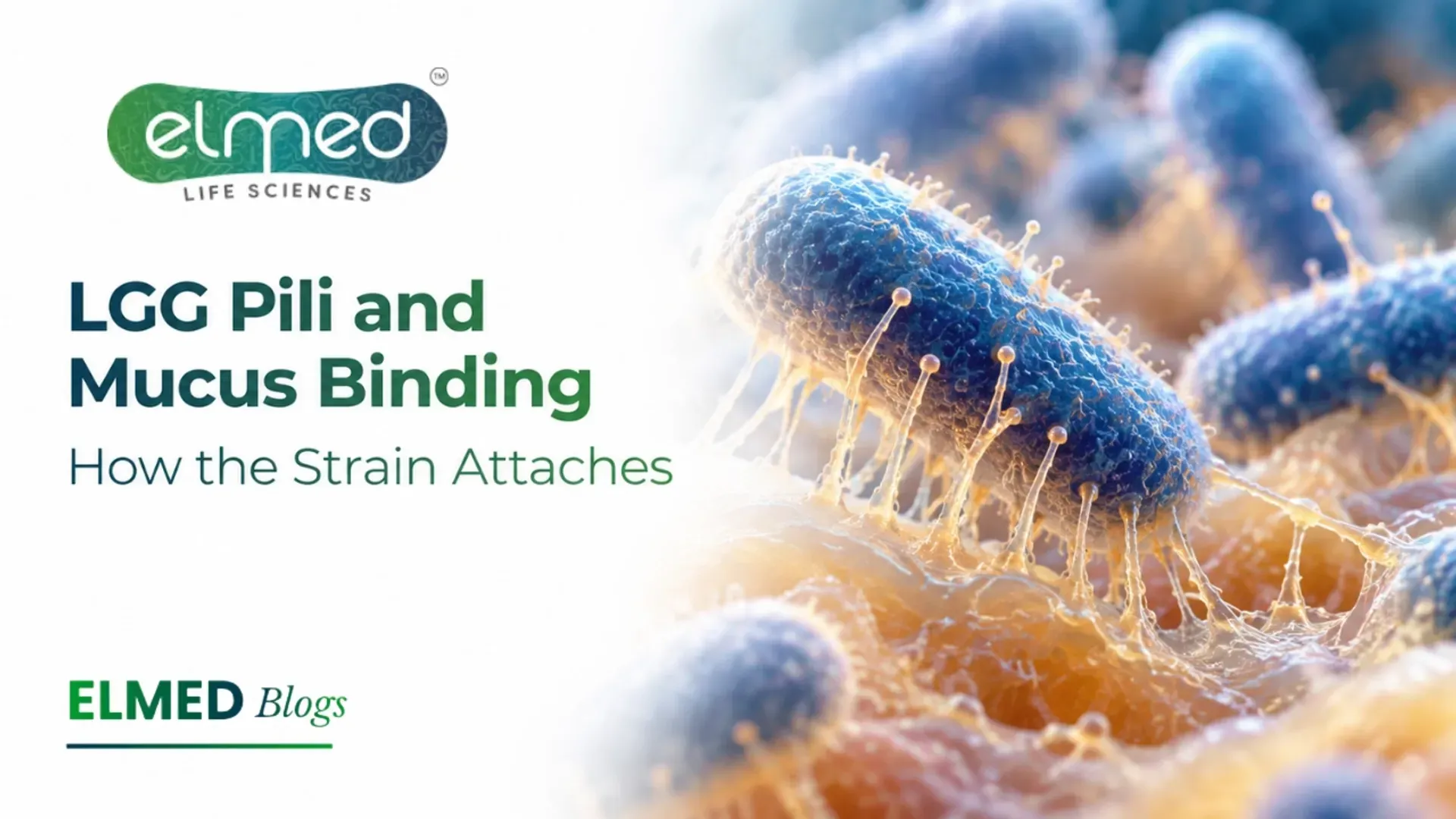
LGG Pili and Mucus Binding: How the Strain Attaches
How Lactobacillus rhamnosus GG attaches to gut mucus using SpaCBA pili, what the laboratory studies show, why attachment is only part of the story and what it does not prove.
 Science
LGG and Respiratory Infections in Day Care Children
A careful reading of the Croatian day care trial of Lactobacillus rhamnosus GG: what it measured, what it found for upper respiratory infections and why gastrointestinal results were null.
Stay in the Loop
Get the latest probiotic industry insights delivered to your inbox.