
Lactobacillus rhamnosus HN001: What the Research Shows
Lactobacillus rhamnosus HN001 has two decades of human research. A clear review of its eczema, immune and pregnancy studies, and what remains unproven.
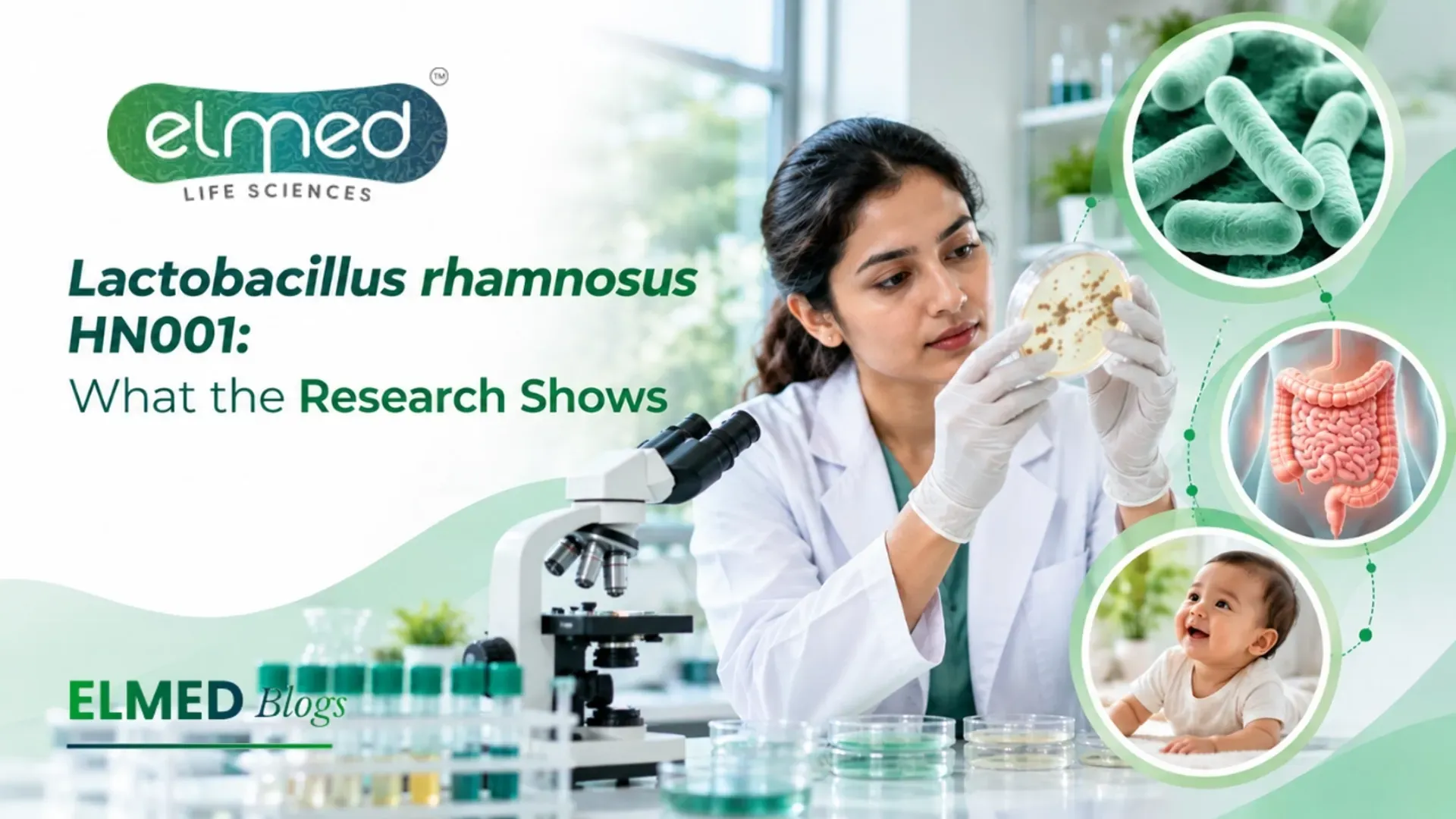


Lactobacillus rhamnosus HN001 is a probiotic strain with one of the longest human follow-up records of any probiotic, mostly from a New Zealand birth cohort. Its clearest evidence concerns reduced eczema in children whose mothers and who themselves received it early in life. Evidence for digestive, immune and pregnancy outcomes is more limited.
Where does HN001 come from?
HN001 was developed by dairy research scientists in New Zealand during the 1990s as part of a programme to identify lactic acid bacteria with useful properties for human health. It is now supplied by IFF within the HOWARU probiotic range. Its current scientific name is Lacticaseibacillus rhamnosus HN001.
Early laboratory work established that HN001 survives conditions simulating stomach acid and bile and adheres to human intestinal cells. These properties made it a candidate for human trials.
What did the eczema prevention trial find?
The most important HN001 study is a randomised, double-blind, placebo-controlled trial run in Wellington and Auckland, New Zealand, among families with a history of allergic disease.
Pregnant women took HN001, a Bifidobacterium strain called HN019, or placebo from about 35 weeks of pregnancy and, if breastfeeding, for six months after birth. Their infants received the same supplement from birth to two years.
By age two, children in the HN001 group had significantly less eczema than those in the placebo group. Children in the HN019 group did not differ from placebo. The research team continued following the children, reporting lower eczema prevalence in the HN001 group at ages four and six, and later reporting a lower rate of atopic sensitisation at age eleven.
Two lessons follow. First, a strain-level effect was seen for HN001 but not for the bifidobacterium tested alongside it. Second, the benefit was in eczema, not in asthma or other allergic outcomes where results were inconsistent.
What has HN001 shown in pregnancy?
The same cohort and a later New Zealand trial examined maternal outcomes. In a trial in which women took HN001 from early in pregnancy, secondary analyses reported a lower rate of gestational diabetes, particularly in older women and those with a history of the condition, and lower postnatal depression and anxiety scores.
These were secondary outcomes, meaning the trial was not designed primarily to test them. Secondary findings can arise by chance, so they are treated as hypotheses requiring dedicated trials rather than established effects.
What has HN001 shown for immunity?
Small trials in older adults, conducted in the early 2000s, reported increased activity of natural killer cells, which destroy infected and abnormal cells, and of phagocytes, which engulf microbes, during HN001 supplementation. These are laboratory markers measured in blood samples. The studies did not show fewer infections or other clinical benefits, so they indicate biological activity rather than proven protection.
What about HN001 and digestion?
Trials of HN001 specifically targeting digestive symptoms in adults, such as bloating or irregular bowel habits, are few. Its use in digestive products rests mainly on general lactobacillus mechanisms, good tolerance in trials and its long safety record, rather than strain-specific digestive outcome data.
MellowFlora from ELMED Life Sciences combines HN001 with Lactobacillus acidophilus La-14 at 10 billion CFU per sachet, as a daily gut wellness product for adults. The scientific background to that use is set out in the guide to probiotic sachets for sensitive digestion.
How should these findings be read?
Three features of the HN001 evidence deserve emphasis. The eczema result is the strongest finding and comes from a randomised design with long follow-up, which is the most reliable kind of evidence for preventive effects. The pregnancy and immune findings are weaker because they come from secondary analyses and small studies. And the whole body of work concerns specific populations, namely mothers and infants in a high-risk allergic setting and older adults, so it cannot be applied directly to healthy adults seeking digestive comfort.
A careful reader should therefore treat HN001 as a well-studied, well-tolerated strain with a strong record in one area and promising but unconfirmed signals in others. That framing is consistent with how regulators and guideline bodies approach probiotic claims generally, which is to ask for strain-specific, outcome-specific proof.
Who should take care with HN001?
HN001 has been well tolerated in trials involving pregnant women, infants and older adults. As with any probiotic, people with severely weakened immunity, central venous catheters, damaged heart valves or serious acute illness should not start it without medical advice. Follow the label and any instructions from your doctor.
Frequently Asked Questions
Explore More Articles
 Science
Prebiotics, FOS and Digestive Enzymes in Pet Supplements
What FOS, other prebiotics and digestive enzymes do in dog and cat supplements, how much evidence there is, which pets need enzymes for medical reasons and what B vitamins add.
 Science
LGG Pili and Mucus Binding: How the Strain Attaches
How Lactobacillus rhamnosus GG attaches to gut mucus using SpaCBA pili, what the laboratory studies show, why attachment is only part of the story and what it does not prove.
 Science
LGG and Eczema Prevention: What the Finnish Trials Show
What the Finnish trials of Lactobacillus rhamnosus GG found for eczema prevention in at-risk infants, how the benefit held at two and four years, and why guidelines remain cautious.
Stay in the Loop
Get the latest probiotic industry insights delivered to your inbox.