
Antimicrobial Peptides from Bacillus: What Science Says
Bacillus subtilis makes surfactin, subtilosin and other antimicrobial compounds. A clear look at what laboratory studies show and why gut benefits are not proven.
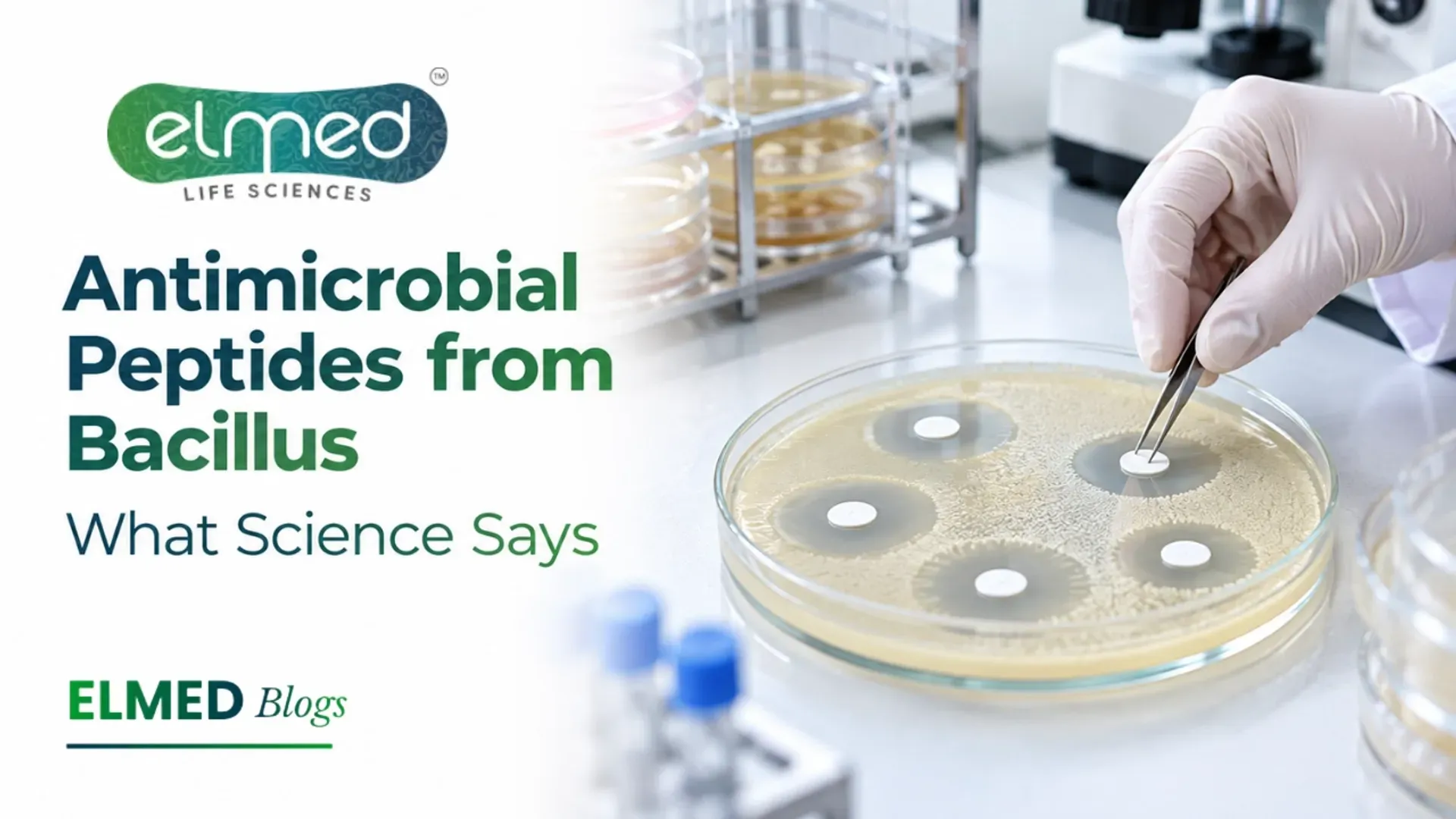


Bacillus subtilis produces a wide range of antimicrobial compounds, including lipopeptides such as surfactin, iturin and fengycin, and bacteriocins such as subtilosin A. Many inhibit bacteria or fungi in laboratory cultures. Evidence that they act at useful levels in the human gut is limited.
Why do bacteria make antimicrobials?
Microbes compete. In soil and in the gut, bacteria that make compounds to kill or slow rivals gain access to nutrients and space. B. subtilis is among the most productive antimicrobial producers in the bacterial world, and a single strain can carry genes for several different compounds.
These compounds are tools for the bacterium, not designed as medicines. Whether they matter to a person who takes a Bacillus probiotic is a separate scientific question.
What are the main groups?
Lipopeptides. These are short chains of amino acids joined to a fatty acid tail. Surfactin disrupts cell membranes and has strong surface-active properties, which is why it is studied as a biosurfactant. Iturins have mainly antifungal activity. Fengycins also act against filamentous fungi.
Bacteriocins. These are small proteins made by ribosomes that inhibit closely related bacteria. Subtilosin A and subtilin from B. subtilis belong here. Many are modified after synthesis, which gives them stability.
Other compounds. Bacilysin, a dipeptide antibiotic, and enzymes that break down cell walls are also produced by some strains.
Which compounds a strain makes depends on its genes. Probiotic strains are screened to confirm that they carry no genes for harmful toxins, so the production profile of one strain cannot be assumed for another.
What do laboratory studies show?
In agar plate tests, B. subtilis strains can form clear zones where growth of pathogens such as Staphylococcus aureus, Listeria monocytogenes and Candida species is inhibited. Purified lipopeptides and bacteriocins have inhibited a range of organisms in cultures, sometimes at low concentrations.
These tests demonstrate potential. They are done in nutrient-rich media under controlled conditions, which are very different from the intestine, where nutrients, bile salts, mucus and a dense resident microbiome all influence what a bacterium produces.
Do they work in the human gut?
Direct evidence is thin. Compounds made in the intestine would be diluted by fluid, bound by food and degraded by digestive enzymes. Whether Bacillus cells grow enough in the gut to make meaningful amounts is not established, especially as probiotic Bacillus appear to pass through temporarily.
Animal studies in poultry and pigs show that Bacillus feed additives can change gut microbiota and reduce some pathogens, which supports the concept, but animal results do not transfer directly to people. Human trials of Bacillus probiotics have mostly measured symptoms or immune markers, not antimicrobial activity in the gut.
The CU1 trial in older adults , for example, measured secretory IgA and infection days. It did not test whether antimicrobial compounds were made or active.
Could these compounds harm the gut microbiome?
Broad-spectrum antimicrobial activity could in theory affect beneficial bacteria. However, bacteriocins tend to target close relatives, and lipopeptide activity is concentration dependent. No human study of a standard Bacillus probiotic has reported lasting harmful changes to the resident microbiome. The topic needs more study.
How are these compounds studied?
Researchers identify antimicrobial compounds by growing a strain, collecting the liquid in which it grew, and testing that liquid against target organisms. Mass spectrometry is then used to find the molecules responsible, and genome sequencing shows which gene clusters could make them.
Genome analysis is useful for safety, because it can confirm that a probiotic strain lacks genes for harmful toxins. It cannot show whether a gene is switched on in the human gut, which is why laboratory and genomic work only supports, but does not replace, trials in people.
What does this mean for probiotic choice?
Antimicrobial production is one of several traits used to select probiotic strains, along with safety, survival, and clinical data. A strain with good laboratory activity still needs human trials. When reading a probiotic label or claim, ask what human evidence exists for that strain, and be sceptical of claims built only on laboratory results.
Bacimed Syrup from ELMED Life Sciences contains B. subtilis CU1 at 2 billion CFU per 5 mL, as a supplement for gut balance. Its published human data concern immune markers in older adults. The wider evidence is covered in the guide to Bacillus subtilis probiotic syrup.
Frequently Asked Questions
Explore More Articles
 Science
Prebiotics, FOS and Digestive Enzymes in Pet Supplements
What FOS, other prebiotics and digestive enzymes do in dog and cat supplements, how much evidence there is, which pets need enzymes for medical reasons and what B vitamins add.
 Science
LGG Pili and Mucus Binding: How the Strain Attaches
How Lactobacillus rhamnosus GG attaches to gut mucus using SpaCBA pili, what the laboratory studies show, why attachment is only part of the story and what it does not prove.
 Science
LGG and Eczema Prevention: What the Finnish Trials Show
What the Finnish trials of Lactobacillus rhamnosus GG found for eczema prevention in at-risk infants, how the benefit held at two and four years, and why guidelines remain cautious.
Stay in the Loop
Get the latest probiotic industry insights delivered to your inbox.