
Dairy & Livestock Probiotics: Gut Health Applications
Dairy and livestock probiotics support digestive health, feed utilization, and microbial balance through strain-specific formulations designed for animal nutrition.
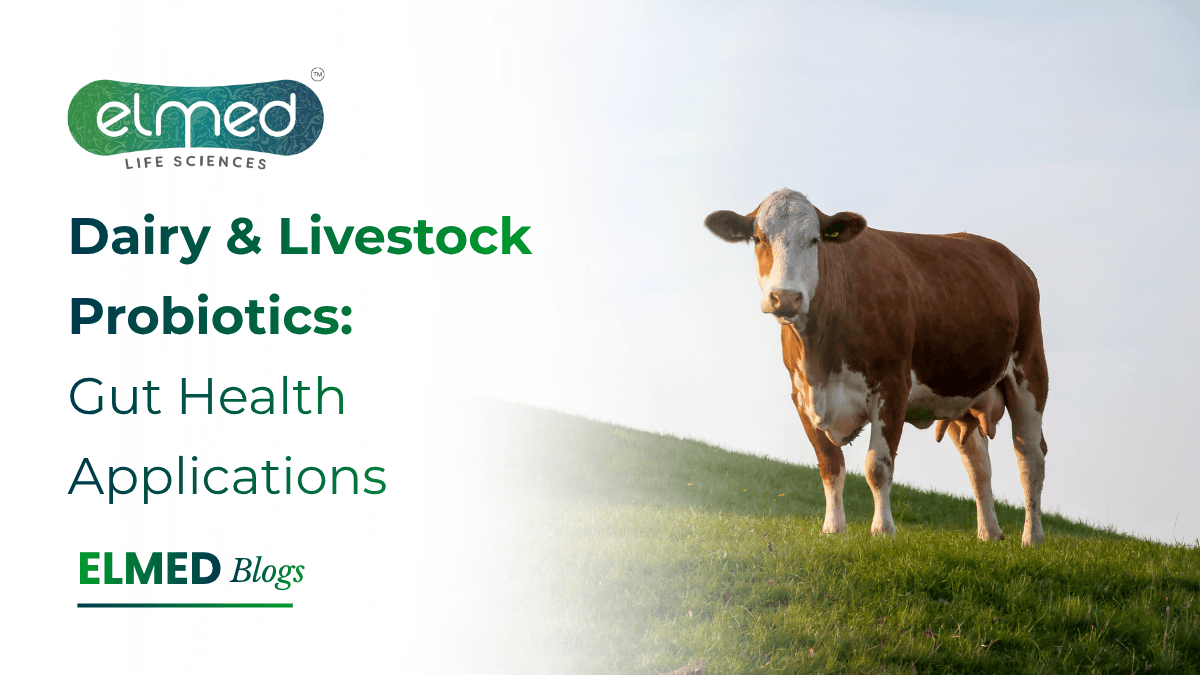


Dairy & Livestock Probiotics: Gut Health Applications
Dairy and livestock probiotics are preparations containing selected live microorganisms used in animal nutrition to support gastrointestinal health and microbial balance. They are formulated for animals such as dairy cattle, calves, beef cattle, sheep, goats, and other livestock depending on the product and regulatory approval.
The purpose is not simply to add bacteria to feed. A useful livestock probiotic must survive manufacturing, storage, and administration while delivering the intended microorganism at the specified level.
That requires careful strain selection and formulation.
Quick Answer
Dairy and livestock probiotics are microbial feed or nutritional preparations designed to support digestive function and intestinal microbial balance in animals.
Depending on the product, they may contain selected strains of Bacillus, lactic acid bacteria, Saccharomyces yeasts, or other microorganisms with documented characteristics relevant to animal nutrition.
Their effects are strain-specific. A probiotic that performs well in poultry should not automatically be transferred into a dairy-cattle formulation simply because both products fall under animal probiotics.
The animal, diet, production stage, and delivery system all matter.
Why Gut Health Matters in Dairy and Livestock
The gastrointestinal tract is central to nutrient digestion and animal performance.
In ruminants such as cattle, sheep, and goats, the rumen contains a complex microbial community responsible for fermenting feed and producing nutrients that the animal can use. Changes in feed composition, intake, environmental conditions, and animal stress can influence this microbial environment.
Calves present a different challenge.
Their digestive system changes substantially as they transition from a milk-based diet toward solid feed and develop a functional rumen.
That means a probiotic formulation for a mature dairy cow should not simply be scaled down and marketed for calves. The biological target is different.
Ruminants Require a Different Probiotic Strategy
The rumen is not just another section of the digestive tract.
It is a large fermentation chamber containing bacteria, protozoa, fungi, and other microorganisms. Feed components are broken down through microbial fermentation, producing volatile fatty acids and other metabolites that contribute to the animal's energy supply.
For this reason, probiotic products for adult ruminants are frequently designed around microbial interactions in the rumen and intestinal tract.
Selected yeast preparations, including Saccharomyces cerevisiae, have been used in ruminant nutrition, while specific bacterial preparations are also investigated for animal-feed applications.
The formulation should match the biological target.
Calf Probiotics Need a Separate Formulation Approach
Young calves are particularly relevant for probiotic development because their gastrointestinal microbial community is still developing.
Early-life nutrition, milk or milk-replacer feeding, starter feed intake, environmental hygiene, and weaning all influence gastrointestinal development.
A calf probiotic formulation may therefore be designed around different practical objectives from an adult-cow product.
The delivery format matters as well.
Probiotics can be incorporated into milk replacers, starter feeds, supplements, or other suitable delivery systems depending on the product and applicable regulations.
A formulation that disperses well in dry feed may not behave the same way in liquid administration.
Strain Selection Is the First Technical Decision
The microorganism should be selected before the commercial format.
Common microbial groups considered in livestock probiotic formulations include:
· Bacillus species
· Selected Lactobacillus and related lactic acid bacteria
· Bifidobacterium species
· Saccharomyces cerevisiae and other selected yeasts
The exact strain matters.
Different strains within the same species can have different tolerance to temperature, moisture, oxygen, feed processing, and gastrointestinal conditions. Their biological characteristics also differ.
This is why a label that simply says "probiotic blend" provides limited technical information.
For serious product development, strain identity and specifications should be clearly documented.
Feed Processing Can Make or Break Viability
Livestock probiotics are commonly incorporated into compound feed, premixes, mineral mixtures, or supplements.
That creates a manufacturing challenge.
Feed processing can involve heat, moisture, pressure, mixing, and mechanical stress. Sensitive microorganisms may lose viability during these stages.
Spore-forming Bacillus strains are attractive in many feed applications because spores provide greater resistance to several environmental stresses than vegetative bacterial cells.
That does not make every Bacillus product automatically suitable.
The specific strain still needs evaluation under the actual processing conditions.
A laboratory CFU value taken before production is not enough. The relevant question is how much viable microorganism remains in the finished product.
Dairy Feed and Water Applications
The delivery method should be selected according to the animal, farm system, and formulation.
Feed-Based Delivery
Feed is a practical route for many livestock probiotics because it allows incorporation into regular nutrition programs.
The formulation must provide good mixing uniformity and protect the microorganisms during manufacturing and storage.
For mineral or premix products, interactions with other ingredients also deserve attention.
Water-Based Delivery
Some products are formulated for administration through drinking water.
This requires good dispersibility, suitable stability after reconstitution, and controlled dosing. Water quality, temperature, and the time between preparation and consumption can affect microbial viability.
The product should be designed for the delivery route rather than adapted to it at the last stage.
What Benefits Are Manufacturers Targeting?
Livestock probiotic products are developed for several nutritional and production-related objectives.
Depending on the animal, strain, and formulation, development programs may investigate:
· Digestive and intestinal health
· Microbial balance
· Feed utilization
· Support during dietary transitions
· Calf gut health
· Rumen microbial activity
· General nutritional support
Evidence should remain strain-specific.
A result observed in one animal species or production stage cannot automatically be applied to another. Likewise, evidence for one Saccharomyces strain does not establish identical performance for every yeast preparation.
That distinction matters in both product development and marketing.
Manufacturing Quality Controls
Animal probiotics need the same basic discipline expected from other microbial products, with additional attention to the realities of feed manufacturing.
Key controls include:
Strain identity — The microorganism must be traceable to the intended strain or defined microbial preparation.
Viable count — The finished product should meet its defined microbiological specification.
Microbial purity — Unwanted microbial contamination needs appropriate control.
Processing stability — Survival should be evaluated under the intended feed or manufacturing process.
Moisture control — Excess moisture can reduce stability and shorten shelf life.
Packaging — Packaging should protect the formulation from environmental exposure during storage and distribution.
Stability testing — The product should be evaluated under its intended storage conditions.
This is where good formulation work earns its keep.
Storage and Shelf Life Matter
A livestock probiotic can leave the manufacturing facility in specification and still lose viability during distribution.
Temperature, humidity, oxygen exposure, packaging, and storage duration all influence microbial survival.
For dry products, moisture protection is particularly important. High-barrier packaging can help limit moisture ingress, while appropriate storage instructions reduce unnecessary exposure to damaging conditions.
Shelf life should be supported by stability data.
Do not build the expiry date around the initial production count alone.
Common Mistakes
Using the same formulation across species
Cattle, calves, sheep, and goats have different digestive physiology and feeding systems. A formulation should have a defined target animal and production stage.
Selecting probiotics by species name alone
Species-level identification is useful, but strain-level information provides a more meaningful basis for formulation and quality control.
Focusing only on starting CFU
The finished product needs to retain its specified viable count through manufacturing and storage. A large initial number is not a substitute for stability.
Ignoring feed-processing conditions
A probiotic that looks excellent before pelleting or premix manufacturing may perform very differently after processing.
Treating probiotics as a replacement for management
Feed quality, water hygiene, vaccination, housing, biosecurity, and veterinary management remain fundamental. Probiotics are one component of a broader animal-health and nutrition program.
Choosing a Dairy & Livestock Probiotic Manufacturing Partner
A suitable manufacturing partner should understand both microbial formulation and animal nutrition.
Ask whether the manufacturer can support:
· Strain selection and documentation
· Feed-compatible formulation
· Premix and powder development
· Viable-count testing
· Microbial purity testing
· Stability studies
· Moisture and packaging control
· Batch traceability
· Product specifications and Certificates of Analysis
For export products, regulatory requirements in the destination market should also be reviewed before the formulation and label are finalized.
A manufacturer that understands only capsule probiotics may not be the right partner for a high-volume livestock feed application.
The processing environment is different. So are the commercial constraints.
Key Takeaways
· Dairy and livestock probiotics are microbial preparations used to support digestive health and microbial balance in animal nutrition.
· Probiotic requirements differ between adult ruminants, calves, and other livestock species.
· Ruminant products need to account for the unique microbial environment of the rumen.
· Selected Bacillus strains and yeast preparations are relevant to many livestock feed applications.
· Feed processing can reduce probiotic viability, making strain and formulation selection important.
· Finished-product viable count matters more than the starting microbial count alone.
· Packaging, moisture control, storage, and stability testing are central to shelf-life performance.
· Probiotics should complement good nutrition, hygiene, biosecurity, vaccination, and veterinary management.
· Strain identity and evidence should guide product development rather than simply choosing a high-CFU blend.
The Bottom Line
Dairy and livestock probiotic development is a different exercise from simply adapting a human probiotic formula for animal use.
The target species comes first. Then the production stage, biological objective, strain, dose, delivery method, feed compatibility, processing conditions, and stability requirements need to line up.
For manufacturers, the strongest products are built around the actual farm application. A probiotic intended for calf nutrition has different requirements from one designed for adult dairy cattle, and a feed-grade powder has different formulation constraints from a human capsule.
Get those decisions right early. The downstream manufacturing becomes much easier.
Frequently Asked Questions
Explore More Articles
 Guide
GuideHow to Launch Your Own Probiotic Brand
Learn how to launch your own probiotic brand, from strain selection and formulation to contract manufacturing, testing, packaging, compliance, and market launch.
 Guide
GuideImportance of In-House R&D in Probiotic Manufacturing
In-house R&D helps probiotic manufacturers control strain selection, formulation, stability, scale-up, testing, and product development from concept to commercial production.
 Guide
GuideQuestions to Ask a Probiotic Manufacturer
The right questions can help brands evaluate probiotic manufacturers for strain expertise, formulation quality, stability, compliance, documentation, and production capabilities.
Stay in the Loop
Get the latest probiotic industry insights delivered to your inbox.