Digestive Enzymes in Children: What They Do and When They Help
What digestive enzymes do in a child's gut, when enzyme replacement is essential, and what the limited evidence says about over-the-counter enzyme blends for functional symptoms.
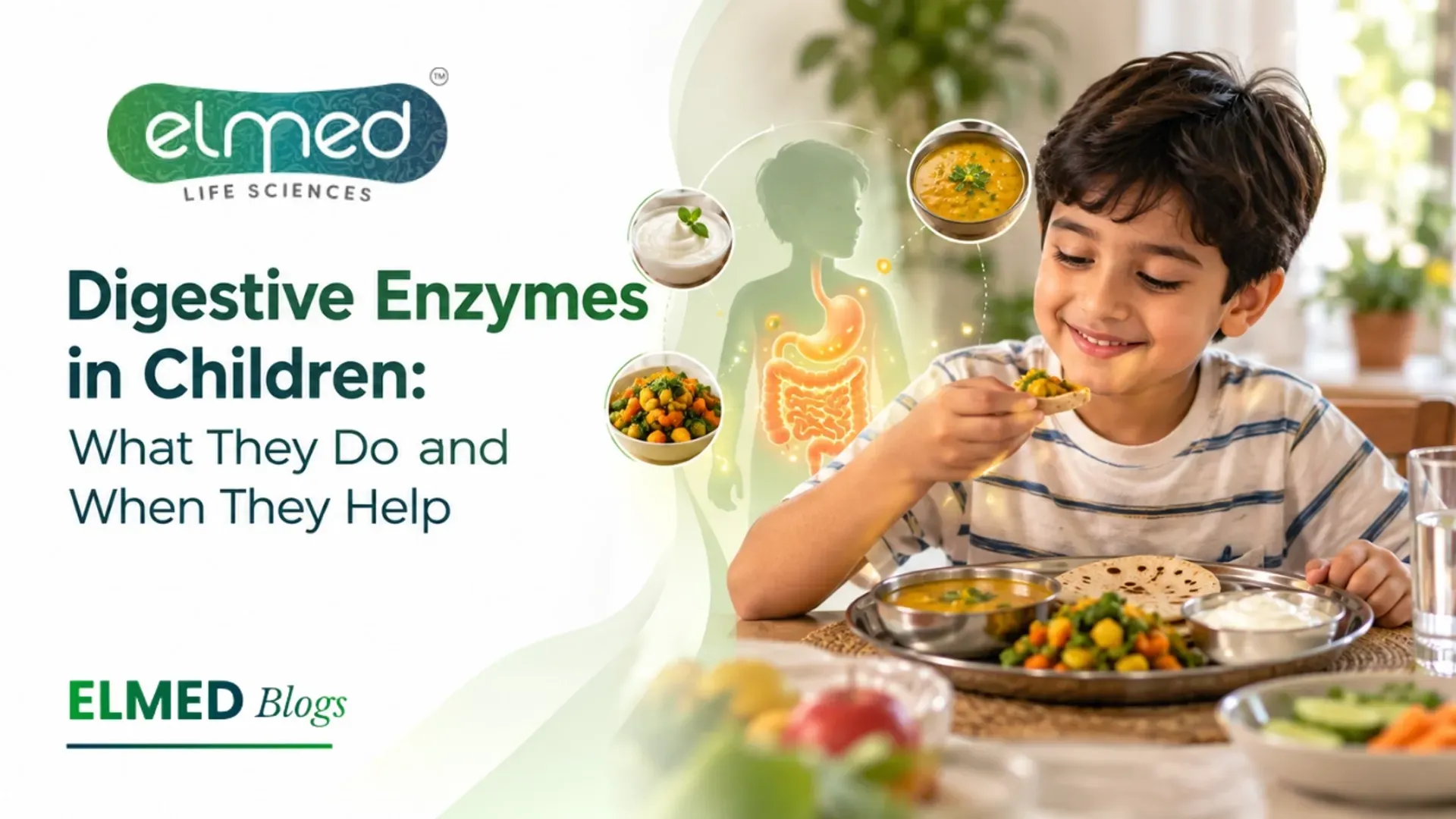


Digestive enzymes break food into small molecules the body can absorb. Healthy children make enough for a normal diet. Prescription enzyme replacement is essential in conditions such as cystic fibrosis, while over-the-counter enzyme blends have limited evidence and, at most, a modest role in mild functional symptoms.
What do digestive enzymes do?
Enzymes are proteins that speed up reactions without being used up. In digestion they act on the three main nutrients.
Amylase breaks starch into sugars. It is made in saliva and by the pancreas.
Proteases such as pepsin, trypsin and chymotrypsin break proteins into peptides and amino acids. They come from the stomach and pancreas.
Lipase splits fats into fatty acids and glycerol. The pancreas supplies most of it.
Brush border enzymes, including lactase, sit on the surface of cells lining the small intestine and finish the digestion of sugars and peptides.
Together they allow absorption of nutrients through the small intestine, where most uptake occurs.
How well do healthy children digest food?
The pancreas has a large reserve capacity. In health, it makes far more enzymes than a typical meal needs, and food digestion is usually efficient even in young children. Newborns produce less pancreatic amylase and lipase, and this reaches adult levels in the first months to years of life, helped in the first months by lipase in breast milk.
A child with occasional heaviness or bloating after a large, fatty meal does not necessarily have an enzyme deficiency. Eating pattern, meal size, fibre, swallowed air and gut sensitivity are far more common explanations.
When are enzymes medically essential?
Enzyme replacement therapy is necessary when the pancreas cannot deliver enzymes to the gut. The best-known cause in children is cystic fibrosis, in which thick secretions block pancreatic ducts. Others include chronic pancreatitis, some genetic conditions and surgery on the pancreas or bowel.
Children with exocrine pancreatic insufficiency may have greasy, bulky, foul-smelling stools, poor weight gain, and deficiencies of fat-soluble vitamins. They need a specialist diagnosis, tests such as faecal elastase, and prescription pancreatic enzyme capsules taken with meals at doses calculated by weight and fat intake. This is a medical treatment, not a supplement.
What about lactase?
Lactose intolerance results from low lactase, the enzyme that digests milk sugar. Primary lactase decline begins in many children from about five years of age onward, particularly in South Asian populations. Symptoms include bloating, wind, cramps and loose stools after milk. Lactase enzyme drops or tablets are available and can help some people, and reducing dairy or choosing fermented products such as curd, which is often better tolerated, is another approach.
Do over-the-counter enzyme blends help?
Supplements often combine amylase, protease and lipase, sometimes with other enzymes derived from fungi such as Aspergillus. The idea is to give additional digestive capacity during a meal.
Good trials of such blends in children are scarce. Most evidence comes from adults or from small, uncontrolled studies, and in healthy digestion there is little for the extra enzymes to do. Any benefit in mild functional symptoms is likely to be modest and individual.
One published study in 95 children aged 5 to 16 years with functional abdominal pain gave Bacillus coagulans GBI-30, 6086 combined with digestive enzymes for three weeks. Symptom and quality of life scores improved, but the study had no placebo group and tested a combination, so the effect of the enzymes cannot be isolated.
Are enzyme supplements safe for children?
Over-the-counter enzyme blends are generally well tolerated, with occasional mild effects such as loose stools, nausea or abdominal discomfort. Children with allergies to moulds or fungi should avoid fungal-derived enzymes unless a doctor advises otherwise. High-dose pancreatic enzymes in prescription form carry specific risks, including bowel complications in cystic fibrosis if overdosed, which is why they are managed by specialists.
Enzymes also should not be used to avoid evaluation. Weight loss, poor growth, greasy stools, blood in the stool or persistent vomiting need medical assessment.
How does this relate to TummyZen?
TummyZen from ELMED Life Sciences pairs Bacillus coagulans BC30 at 500 million CFU per dose with digestive enzymes, as a supportive paediatric dry syrup. It is a supplement for digestive comfort and not a replacement for prescription enzyme therapy. The enzyme types and amounts are given on the product label. The wider evidence is in the guide to Bacillus coagulans BC30 dry syrup for children.
Frequently Asked Questions
Explore More Articles
 Guide
Antibiotics and Your Pet's Gut: Where Probiotics Fit
How antibiotics disturb a dog's or cat's gut bacteria, why finishing the course still matters, what research says about probiotics during and after treatment, and how to space doses safely.
 Guide
How to Give a Probiotic Sachet to Your Dog or Cat
Practical steps for giving a probiotic sachet to a dog or cat: what to mix it with, how to handle fussy eaters, multi-pet homes, storage, timing with meals and medicines, and mistakes to avoid.
 Guide
Dog Diarrhoea: Causes, Home Care and When to Call the Vet
Why dogs get diarrhoea, how to tell small bowel from large bowel signs, what home care is reasonable, which human medicines are dangerous and which symptoms mean an urgent vet visit.
Stay in the Loop
Get the latest probiotic industry insights delivered to your inbox.