
How to Measure a Probiotic Syrup Dose Accurately
How to measure a probiotic syrup dose correctly: why kitchen spoons fail, how to use an oral syringe or cup, shaking, storage and what to do after a spill or missed dose.
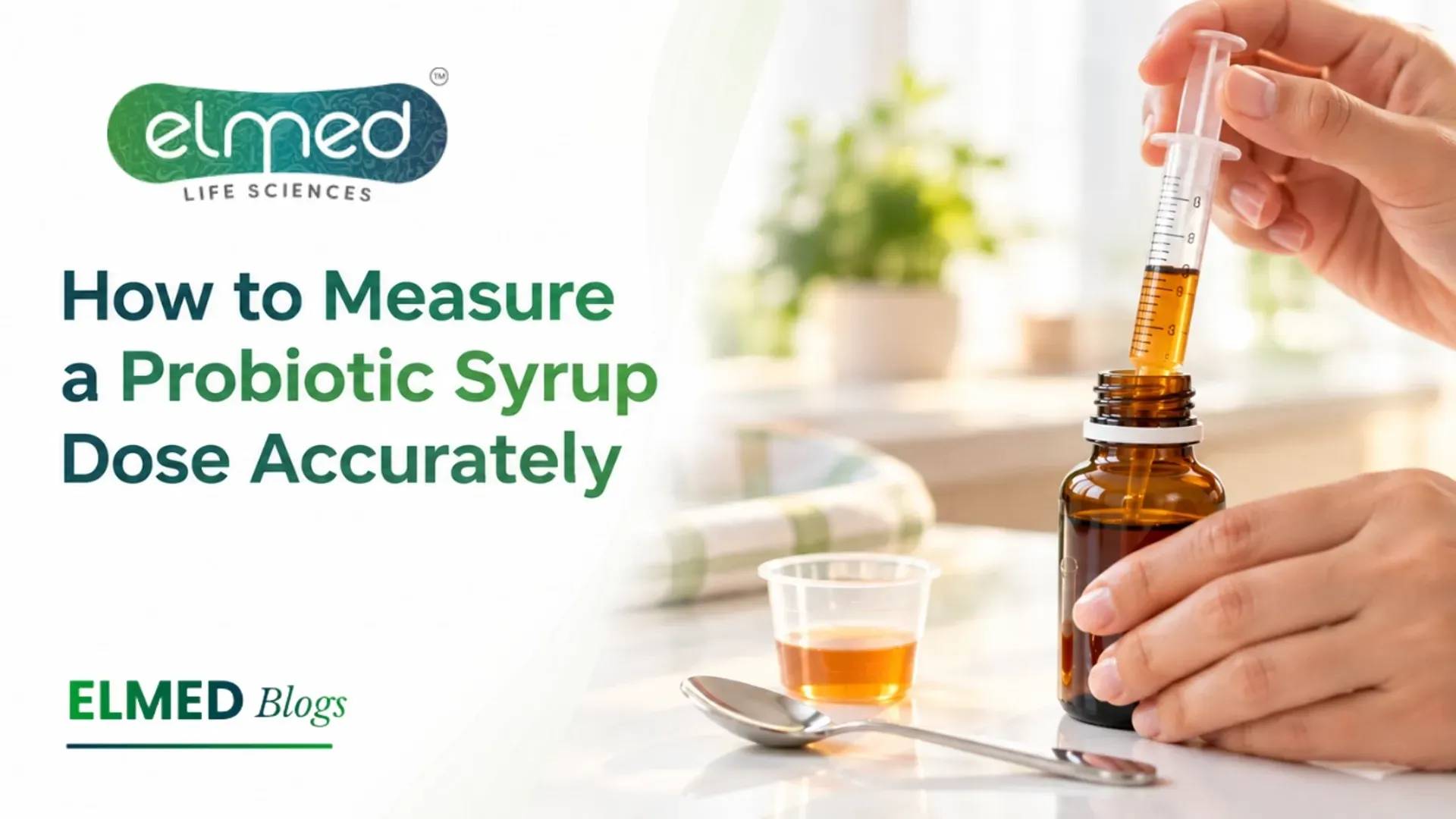


Use an oral syringe or a dosing cup marked in millilitres, shake the bottle before each dose, and read the volume at eye level. Household spoons vary too much to measure a probiotic syrup reliably. The number of live organisms you take depends directly on the volume you measure.
Why does measuring matter for a syrup?
A probiotic syrup is labelled with a count per fixed volume. Bacimed Syrup, for example, provides 2 billion CFU per 5 mL. If the volume measured is half of what was intended, the dose is halved. If it is double, so is the dose. With a sachet or capsule the unit is built in, but a liquid depends on the person measuring it.
Dosing errors with liquid medicines are among the most common causes of avoidable harm in children. Studies of caregivers have found that many measure incorrectly, particularly when using household spoons.
Why are kitchen spoons unreliable?
Teaspoons and tablespoons used at the table differ in size, and their capacity ranges from about 2.5 mL to more than 7 mL. A level teaspoon of one design can deliver nearly twice as much as another. Filling to the brim, spilling and uneven pouring add further error.
A medical teaspoon is defined as exactly 5 mL, but the two are not interchangeable. Always use a device marked in millilitres.
Which device is best?
Oral syringe. An oral syringe gives the most accurate small volumes and is easiest to use for young children, since the tip can be placed inside the cheek. Remove any cap and check that no air bubbles remain.
Dosing cup. A cup with clear marks suits larger volumes such as 5 mL or 10 mL. Place it on a flat surface and read the mark at eye level, not from above.
Dropper. A dropper supplied with a product is calibrated for that product only. Do not swap droppers between products.
Use the device that came with the product when one is supplied. If none is provided, ask a pharmacist for an oral syringe, which is cheap and widely available.
What are the steps for measuring a dose?
1. Wash and dry your hands.
2. Shake the bottle well, since particles including spores can settle.
3. Open the cap and place it with the open side up to keep it clean.
4. Draw or pour the dose to the mark for the volume advised on the label or by the doctor.
5. Check the volume at eye level and remove any bubbles.
6. Give the dose by mouth, slowly, and allow swallowing between small amounts if the child is young.
7. Close the cap firmly and rinse the device with clean water, then let it dry.
For infants, give the dose into the side of the cheek and not straight to the back of the throat, to reduce the chance of choking.
Can the dose be mixed with food or drink?
Check the label first. If mixing is permitted, use a small amount, such as a spoonful of cool food or a small quantity of cool liquid, and make sure the entire portion is consumed. Avoid hot liquids. Do not add the syrup to a full bottle or a large cup that may not be finished, since this makes the actual dose uncertain.
What if a dose is spilled or missed?
If the child spits out most of the dose or it is spilled, do not give an extra dose immediately. Resume at the next scheduled time. If a dose is missed, give it when remembered unless it is almost time for the next one, and never double up. A probiotic's effect builds across regular use, so an occasional missed dose has little impact.
How should the bottle be stored?
Follow the storage and in-use instructions on the label. In general, keep the bottle tightly closed, away from heat and direct sunlight, and out of reach of children. Spore-based products like Bacimed , which has an 18-month shelf life, tolerate room temperature better than many probiotics, but moisture, heat and contamination still affect quality. Do not use the syrup past the expiry date or if its appearance or smell has changed.
Who decides the dose?
The volume and frequency should come from the product label or the doctor or pharmacist advising on use. Age, weight and health conditions all matter, so the amount for one person cannot be assumed for another. The broader background on spore probiotics is in the guide to Bacillus subtilis probiotic syrup.
Frequently Asked Questions
Explore More Articles
 Guide
Antibiotics and Your Pet's Gut: Where Probiotics Fit
How antibiotics disturb a dog's or cat's gut bacteria, why finishing the course still matters, what research says about probiotics during and after treatment, and how to space doses safely.
 Guide
How to Give a Probiotic Sachet to Your Dog or Cat
Practical steps for giving a probiotic sachet to a dog or cat: what to mix it with, how to handle fussy eaters, multi-pet homes, storage, timing with meals and medicines, and mistakes to avoid.
 Guide
Dog Diarrhoea: Causes, Home Care and When to Call the Vet
Why dogs get diarrhoea, how to tell small bowel from large bowel signs, what home care is reasonable, which human medicines are dangerous and which symptoms mean an urgent vet visit.
Stay in the Loop
Get the latest probiotic industry insights delivered to your inbox.