
Pet Probiotics: Gut Health Support for Dogs & Cats
Pet probiotics are formulated with selected beneficial microorganisms to support digestive health and microbial balance in dogs, cats, and other companion animals.
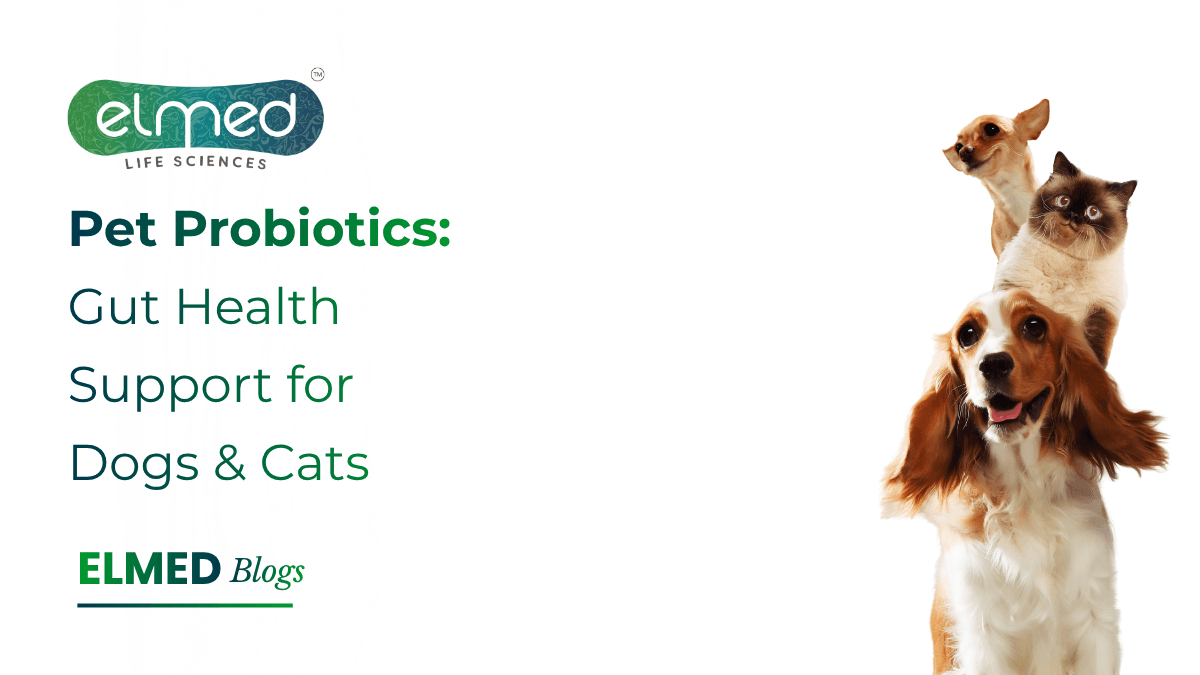


Pet Probiotics: Gut Health Support for Dogs & Cats
Pet probiotics are nutritional products containing selected live microorganisms intended to support gastrointestinal health and microbial balance in companion animals. They are increasingly incorporated into pet supplements, functional treats, powders, capsules, chews, and other convenient dosage forms for dogs and cats.
The basic concept is similar to probiotics used in human nutrition, but pet formulations require a different development approach.
Dogs and cats have different digestive physiology, dietary patterns, body sizes, and nutritional requirements. A successful pet probiotic therefore needs to be designed for the intended animal and application rather than simply adapting a human probiotic formula.
Quick Answer
Pet probiotics are formulations containing selected microorganisms that are intended to support the gastrointestinal microbial environment of companion animals.
Depending on the formulation, they may contain selected strains of Bacillus, Lactobacillus and related lactic acid bacteria, Bifidobacterium, Enterococcus, or other microorganisms suitable for the intended animal-health application.
Their performance is strain-specific.
A probiotic selected for human use should not automatically be assumed to provide the same characteristics in dogs or cats. The strain, dosage, delivery format, stability, palatability, and intended use all need to be evaluated.
Why Gut Health Matters in Pets
The gastrointestinal tract plays an important role in digestion, nutrient utilization, intestinal barrier function, and interactions with the animal's immune system.
Dogs and cats can experience changes in their intestinal environment because of dietary transitions, travel, boarding, environmental stress, changes in routine, or other factors.
Young animals can have additional nutritional and digestive considerations, while older pets may require formulations designed around different dietary needs.
This creates opportunities for targeted probiotic product development.
However, probiotics should be considered nutritional support rather than a replacement for veterinary diagnosis or treatment.
How Pet Probiotics Work
The mechanism depends on the microorganism and strain.
Selected probiotic organisms may interact with the intestinal environment by competing with undesirable microorganisms, producing metabolites, interacting with the intestinal lining, or influencing local immune responses.
Some Bacillus strains form spores, which can provide improved resistance to environmental stress during manufacturing and storage.
Selected lactic acid bacteria may require more careful protection against moisture, oxygen, temperature, and other environmental factors.
This difference has a direct impact on formulation.
The best microorganism for a pet probiotic is not necessarily the one with the highest marketing visibility. It is the one that fits the intended application and can remain viable and stable in the finished product.
Dog and Cat Formulations Are Not Identical
One of the most important considerations in pet probiotic development is the target species.
Dogs and cats differ in digestive physiology and dietary behavior.
Dogs are commonly fed dry kibble, wet food, mixed diets, or treats. Cats have different nutritional requirements and feeding patterns, including a greater dependence on animal-derived nutrients.
As a result, a formulation intended for dogs should not automatically be transferred to cats without appropriate evaluation.
Dosage form and palatability also matter.
A powder designed to be mixed into dog food may need a different serving strategy from a cat supplement intended to be mixed into a small portion of wet food.
Strain Selection Comes First
The microorganism should be selected according to the product's intended function and target animal.
Common microbial groups considered in pet probiotic products include:
- Selected Bacillus strains
- Lactobacillus and related lactic acid bacteria
- Bifidobacterium species
- Selected Enterococcus strains
- Other appropriately evaluated microorganisms
The strain designation is important.
Different strains within the same species can have different characteristics, including gastrointestinal survival, stability, processing tolerance, and biological activity.
For commercial development, manufacturers should maintain clear documentation for the microorganism being used.
A product should not rely solely on a broad statement such as "contains probiotics."
Choosing the Right Dosage Form
Pet probiotics can be developed in several formats.
Powder
Powders are convenient for mixing with pet food and can be formulated as single-dose or multi-dose products.
Moisture protection is important because exposure can reduce probiotic viability.
Capsules
Capsules provide a defined dose and can be useful for veterinary or supplement applications.
Depending on the formulation, protective technologies may be considered to improve stability and gastrointestinal delivery.
Chews and Treats
Chewable formats can improve administration convenience and palatability.
However, the manufacturing process, moisture content, water activity, heat exposure, and storage conditions need to be evaluated because they can affect live microorganisms.
Liquid Formulations
Liquid pet probiotics may be offered as drops, suspensions, or other formats.
These products require careful attention to microbial stability, preservative compatibility, packaging, and storage conditions.
The dosage form should be selected after the probiotic strain and stability requirements are understood.
Stability Is a Major Challenge
Pet probiotic products may spend significant time in warehouses, retail environments, shipping systems, and homes.
Temperature and humidity can therefore have a major impact on viability.
Dry probiotic powders generally offer a practical route for stability, but they still require appropriate moisture-barrier packaging.
For sensitive microorganisms, additional formulation technologies may be needed to protect cells during processing and storage.
Shelf life should be supported by stability data.
The important number is not simply the CFU at manufacturing. It is whether the product remains within its defined specification through the stated shelf life.
Palatability Matters
A technically excellent probiotic has limited commercial value if the pet refuses to consume it.
Pet formulations therefore need to consider:
- Flavor
- Odor
- Texture
- Serving size
- Compatibility with food
- Ease of administration
This is especially important for cats, which can be highly selective about food texture and aroma.
Palatability testing should be considered during product development rather than after the formulation is finalized.
Manufacturing and Quality Control
Pet probiotic manufacturing requires strong microbial quality control from raw materials through finished-product release.
Key parameters can include:
Strain identity — Confirms that the intended microorganism is present.
Viable count — Establishes the number of viable microorganisms in the finished product.
Microbial purity — Helps control unwanted microbial contamination.
Moisture and water activity — Particularly important for dry products.
Processing stability — Determines whether the probiotic survives manufacturing.
Packaging performance — Protects the product from moisture, oxygen, and environmental exposure.
Shelf-life stability — Confirms that the product remains within specification over time.
The finished-product specification should reflect the product the pet owner actually receives.
Safety and Regulatory Considerations
Pet probiotic products need to comply with the applicable regulatory framework in the market where they are manufactured and sold.
The classification can vary depending on the ingredients, claims, dosage form, and intended use.
Manufacturers should therefore establish the regulatory category before finalizing product claims and packaging.
Claims require particular attention.
A statement that a product "supports digestive health" can have different implications from a claim that it treats or prevents a specific disease.
Marketing language should be supported by appropriate evidence and reviewed against applicable requirements.
Common Pet Probiotic Manufacturing Mistakes
Using a human probiotic without evaluation
A microorganism used successfully in human products should not automatically be transferred to a pet formulation without considering the target species and application.
Focusing only on CFU
A large CFU number does not guarantee product performance. Strain identity, viability, stability, dosage, and evidence matter.
Ignoring palatability
Pet products have an additional challenge that many human supplements do not: the consumer is not necessarily the user.
The owner purchases the product, but the pet has to accept it.
Using insufficient moisture protection
Moisture exposure can significantly affect the stability of dry probiotic products.
Treating dogs and cats as the same target
Species-specific formulation considerations can influence dosage, delivery format, and product positioning.
Making therapeutic claims without appropriate support
Probiotic supplements should not be marketed with unsupported disease-treatment claims.
Choosing a Pet Probiotic Manufacturing Partner
A suitable manufacturing partner should understand microbial formulation as well as companion-animal product requirements.
Important capabilities include:
- Strain selection and documentation
- Dog and cat formulation development
- Powder, capsule, chew, or liquid manufacturing
- Viable-count testing
- Microbial purity testing
- Stability testing
- Moisture-control strategies
- Palatability-oriented formulation
- Appropriate packaging
- Batch traceability
- Certificates of Analysis
For international products, the manufacturer should also understand destination-market regulatory requirements and support appropriate technical documentation.
The goal is not simply to produce a probiotic.
It is to produce a stable, appropriately dosed, palatable, and well-documented product designed for the intended companion animal.
Key Takeaways
- Pet probiotics are nutritional products designed to support gastrointestinal microbial balance in companion animals.
- Dogs and cats require different formulation considerations.
- Probiotic effects are strain-specific, making accurate microorganism identification important.
- Powders, capsules, chews, and liquids each present different manufacturing and stability challenges.
- Viable count should be controlled through the product's shelf life.
- Moisture, oxygen, temperature, and processing conditions can affect probiotic stability.
- Palatability is a critical consideration in pet product development.
- Claims should be supported by appropriate evidence and comply with the applicable regulatory framework.
- Pet probiotics should complement appropriate nutrition and veterinary care rather than replace diagnosis or treatment.
The Bottom Line
Pet probiotic development requires more than selecting a familiar microorganism and putting it into a pet-friendly package.
The target species, strain, dose, delivery format, palatability, manufacturing process, packaging, stability, and regulatory requirements all need to work together.
For manufacturers, the strongest approach is to define the intended animal and product objective first, then select the microorganism and build the formulation around its technical requirements.
When those decisions are made early, manufacturers can create pet probiotic products that are easier to manufacture, more stable during distribution, and more practical for everyday use.
Frequently Asked Questions
Explore More Articles
 Guide
GuideHow to Launch Your Own Probiotic Brand
Learn how to launch your own probiotic brand, from strain selection and formulation to contract manufacturing, testing, packaging, compliance, and market launch.
 Guide
GuideImportance of In-House R&D in Probiotic Manufacturing
In-house R&D helps probiotic manufacturers control strain selection, formulation, stability, scale-up, testing, and product development from concept to commercial production.
 Guide
GuideQuestions to Ask a Probiotic Manufacturer
The right questions can help brands evaluate probiotic manufacturers for strain expertise, formulation quality, stability, compliance, documentation, and production capabilities.
Stay in the Loop
Get the latest probiotic industry insights delivered to your inbox.