
Probiotic Contract Manufacturing in India: The Complete Guide
Learn how probiotic contract manufacturing in India works, key selection criteria, quality standards, regulatory requirements, and why India is a preferred global manufacturing hub.
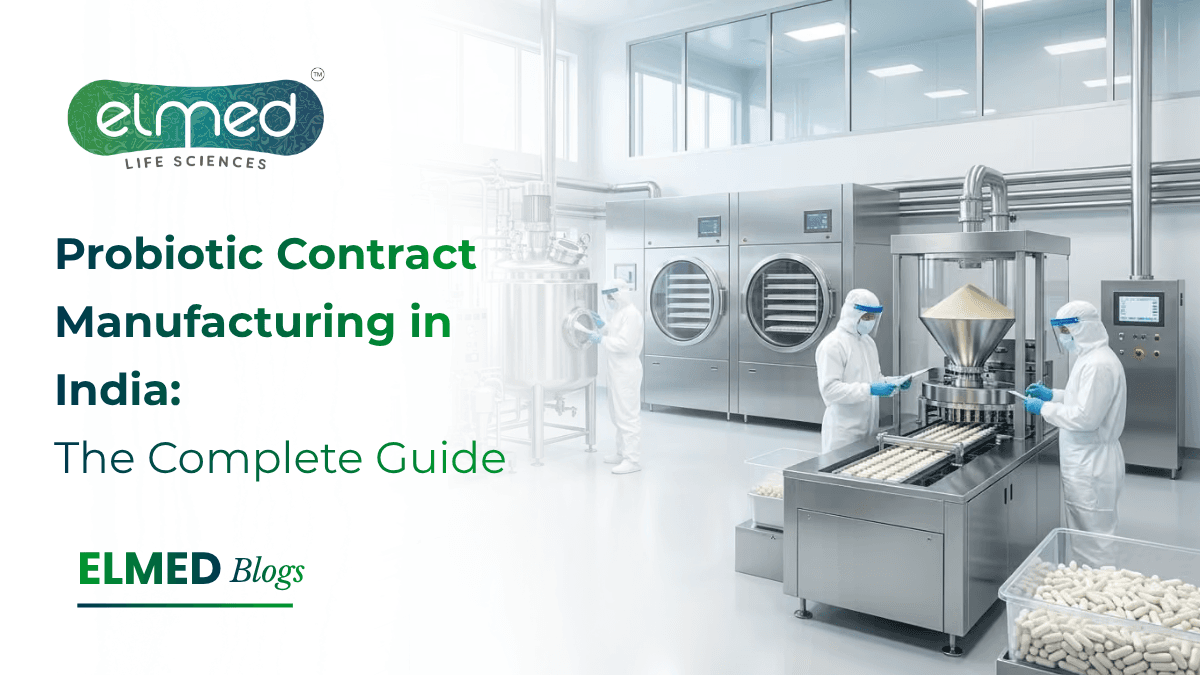


Probiotic Contract Manufacturing in India: The Complete Guide
Probiotic contract manufacturing in India allows healthcare brands, pharmaceutical companies, nutraceutical businesses, and wellness startups to develop high-quality probiotic products without investing in their own manufacturing infrastructure. By partnering with an experienced manufacturer, companies gain access to advanced production facilities, regulatory expertise, scientific formulation support, and scalable manufacturing capabilities.
India has emerged as one of the world's preferred destinations for probiotic manufacturing because of its strong pharmaceutical ecosystem, skilled scientific workforce, internationally compliant manufacturing facilities, and competitive production costs. Whether you plan to launch probiotic capsules, sachets, powders, chewables, or liquid formulations, selecting the right manufacturing partner plays a significant role in product quality and long-term business success.
Quick Answer
Probiotic contract manufacturing is the process of outsourcing the development, formulation, manufacturing, packaging, testing, and sometimes regulatory documentation of probiotic products to a specialized manufacturing company. This enables businesses to launch scientifically developed probiotic supplements while reducing operational costs, regulatory complexity, and manufacturing risks.
Why Is Probiotic Contract Manufacturing Growing in India?
The global interest in probiotics has increased as healthcare professionals and consumers continue exploring the relationship between the gut microbiome and overall health. Research has shown that carefully selected probiotic strains may support digestive balance, immune function, women's health, pediatric nutrition, and other targeted wellness applications.
This growing demand has encouraged healthcare companies to introduce specialized probiotic formulations for different consumer segments. Building an in-house manufacturing facility, however, requires significant investments in infrastructure, specialized equipment, quality systems, regulatory compliance, and microbiological expertise.
Contract manufacturing offers a practical alternative by allowing companies to focus on branding, product development, marketing, and distribution while experienced manufacturers handle production.
India has become an attractive destination because it combines scientific expertise with globally accepted manufacturing practices.
What Is Probiotic Contract Manufacturing?
Probiotic contract manufacturing refers to a partnership where a specialized manufacturer produces probiotic products on behalf of another company under agreed specifications.
Depending on business requirements, the manufacturing partner may provide:
- Product formulation
- Strain selection
- Stability evaluation
- Manufacturing
- Packaging
- Label development
- Regulatory documentation
- Quality testing
- Logistics support
Some businesses provide their own formulation, while others rely entirely on the manufacturer's research and development team to create customized probiotic products.
Why More Brands Choose Contract Manufacturing
Launching a probiotic supplement involves far more than blending ingredients and filling capsules.
Manufacturing requires:
- Controlled environmental conditions
- Specialized microbial handling
- Scientific formulation expertise
- Stability management
- Moisture control
- Temperature-sensitive processing
- Validated quality systems
- Regulatory documentation
- Batch traceability
Developing these capabilities internally often requires years of investment.
Contract manufacturers already possess these systems, enabling companies to reach the market much faster.
Why India Has Become a Global Manufacturing Hub
India has built one of the strongest pharmaceutical manufacturing ecosystems in the world. Many manufacturing companies operate facilities that comply with internationally recognized Good Manufacturing Practices (GMP) while supporting customers across domestic and international markets.
Several factors contribute to India's growing reputation.
Strong Pharmaceutical Infrastructure
India has decades of experience manufacturing pharmaceutical products, nutraceuticals, biologics, and healthcare products.
This expertise extends naturally into probiotic manufacturing, where microbial quality, contamination control, and scientific validation are essential.
Highly Skilled Scientific Workforce
Successful probiotic production depends on microbiologists, formulation scientists, quality assurance professionals, analytical chemists, and process engineers.
India has a large pool of experienced professionals working across pharmaceutical and biotechnology industries.
Their knowledge supports formulation development, strain stability, manufacturing optimization, and quality assurance.
International Quality Standards
Leading probiotic manufacturers invest heavily in quality management systems.
Many facilities operate according to internationally recognized quality standards, helping customers meet domestic and export market expectations.
Quality systems often include:
- GMP-compliant manufacturing
- Standard operating procedures
- Environmental monitoring
- Batch documentation
- Product traceability
- Laboratory testing
- Stability studies
- Equipment validation
These practices help maintain consistency across production batches.
Cost-Effective Manufacturing
Manufacturing efficiency is another reason global healthcare companies choose India.
Lower operational costs combined with advanced production capabilities allow companies to manufacture premium-quality probiotic products while maintaining competitive pricing.
This is particularly valuable for startups launching new brands with limited initial investments.
Types of Probiotic Products That Can Be Manufactured
Modern manufacturing facilities support a wide variety of dosage forms depending on customer requirements.
Common product categories include:
Probiotic Capsules
Capsules remain one of the most popular delivery formats because they protect probiotic strains while offering convenient dosing.
They are commonly used for digestive health, women's health, immunity, and daily wellness formulations.
Probiotic Tablets
Tablets provide convenient packaging and transportation advantages.
Manufacturing these products requires careful formulation because compression pressure may affect probiotic viability if not properly optimized.
Probiotic Powders
Powder formulations are frequently used in pediatric nutrition, sports nutrition, clinical nutrition, and personalized health products.
They may be supplied in jars, pouches, or individual serving sachets.
Sachets
Single-dose sachets improve convenience, dosing accuracy, and product portability.
These products are widely used for children, travelers, and hospital-based nutritional supplementation.
Liquid Probiotics
Some probiotic strains can be incorporated into carefully designed liquid formulations.
Maintaining microbial stability throughout shelf life requires specialized formulation expertise and packaging technologies.
Synbiotic Products
Synbiotics combine probiotics with prebiotics to support beneficial gut bacteria.
These products continue to gain attention across digestive health and functional nutrition markets.
Understanding Probiotic Strains
Not all probiotics are the same.
Different microbial strains perform different biological functions, making strain selection one of the most important aspects of product development.
Common probiotic genera include:
- Lactobacillus
- Bifidobacterium
- Saccharomyces
- Bacillus
- Streptococcus thermophilus
Within each genus are numerous individual strains, each possessing unique characteristics.
Selecting appropriate strains depends on the intended application, scientific evidence, manufacturing compatibility, storage conditions, and regulatory considerations.
Experienced contract manufacturers help customers identify suitable strains based on product objectives instead of simply selecting the most commonly available cultures.
The Probiotic Manufacturing Process
Producing probiotics requires carefully controlled manufacturing conditions to preserve microbial viability from production through the end of shelf life.
Although manufacturing methods differ depending on formulation, the process generally follows several important stages.
Step 1: Product Concept Development
The process begins with understanding the intended market.
Manufacturers evaluate:
- Target consumers
- Desired health applications
- Delivery format
- Label claims
- Packaging preferences
- Regulatory requirements
This stage forms the scientific foundation of product development.
Step 2: Strain Selection
Scientists identify probiotic strains suitable for the desired application.
Selection considers factors such as stability, compatibility, processing tolerance, storage conditions, and intended dosage.
High-quality raw materials sourced from reliable suppliers help improve manufacturing consistency and product reliability.
Step 3: Formulation Development
During formulation, probiotic strains are combined with carefully selected excipients, protective ingredients, carriers, and supporting nutrients.
Formulation scientists work to maintain microbial viability while achieving product stability, consumer convenience, and manufacturing efficiency.
Different dosage forms require different formulation strategies.
Step 4: Controlled Manufacturing
Once the formulation has been finalized, production begins in a controlled manufacturing environment designed to protect probiotic viability. Unlike conventional nutritional ingredients, probiotics are living microorganisms that require carefully monitored processing conditions.
Key manufacturing controls include:
- Temperature monitoring
- Humidity control
- Environmental monitoring
- Cross-contamination prevention
- Cleanroom protocols
- Equipment sanitation
- Process validation
Modern facilities use automated systems wherever possible to improve batch consistency and reduce human error.
Step 5: Quality Control Testing
Quality testing is one of the most important stages in probiotic manufacturing. Every production batch should undergo rigorous laboratory evaluation before release.
Typical quality assessments include:
- Identity testing of probiotic strains
- Colony Forming Unit (CFU) count verification
- Microbial contamination testing
- Heavy metal analysis
- Moisture content evaluation
- Stability testing
- Packaging integrity inspection
- Finished product specification verification
These tests help ensure that the product meets predefined quality standards throughout its intended shelf life.
Step 6: Packaging
Packaging plays a critical role in preserving probiotic stability. Exposure to heat, oxygen, humidity, and light can reduce the viability of live microorganisms over time.
Depending on the formulation, manufacturers may use:
- HDPE bottles
- Blister packs
- Aluminium sachets
- Moisture-resistant pouches
- Stick packs
- Glass containers
Packaging materials are selected based on the product's storage requirements and intended distribution channels.
How to Choose the Right Probiotic Contract Manufacturer
Selecting the right manufacturing partner involves much more than comparing prices. A reliable manufacturer should demonstrate technical expertise, strong quality systems, regulatory knowledge, and the ability to scale production as your business grows.
Manufacturing Certifications
Choose manufacturers that operate under recognized quality systems such as:
- Good Manufacturing Practices (GMP)
- ISO-certified quality management systems
- HACCP where applicable
- Food Safety Management Systems
- Regulatory compliance appropriate for the target market
These certifications indicate that manufacturing processes follow documented quality procedures.
Research and Development Capabilities
An experienced R&D team can support:
- Custom formulations
- New product development
- Ingredient compatibility studies
- Stability optimization
- Taste improvement
- Shelf-life enhancement
This expertise becomes especially valuable when launching innovative probiotic products or expanding an existing portfolio.
Transparent Quality Documentation
Reliable manufacturers maintain complete documentation for every production batch, including:
- Batch Manufacturing Records
- Certificates of Analysis (COA)
- Raw material documentation
- Testing reports
- Traceability records
- Stability data
Comprehensive documentation supports regulatory compliance and builds confidence among distributors and healthcare professionals.
Scalability
As your brand grows, production requirements will increase. A manufacturing partner should be able to support:
- Pilot batches
- Commercial-scale manufacturing
- Large production volumes
- Flexible packaging options
- Export requirements
- Ongoing product improvements
Working with a scalable manufacturer minimizes operational disruptions during business expansion.
Regulatory Considerations
Probiotic products must comply with applicable regulatory requirements in the markets where they are sold.
Manufacturers typically assist with:
- Product documentation
- Ingredient declarations
- Label compliance
- Batch records
- Manufacturing documentation
- Product specifications
For companies planning international expansion, selecting a manufacturer familiar with export documentation and international quality expectations can simplify market entry.
Common Challenges in Probiotic Manufacturing
Developing stable probiotic products presents unique technical challenges. Experienced manufacturers implement specialized processes to address these issues.
Maintaining Viable Cell Counts
Live microorganisms gradually lose viability if exposed to unfavorable processing or storage conditions. Manufacturers must optimize formulation, processing, and packaging to help preserve the declared CFU count throughout the product's shelf life.
Moisture Control
Excess moisture can significantly reduce probiotic stability. Controlled humidity during manufacturing and moisture-resistant packaging are essential for maintaining product quality.
Heat Sensitivity
Many probiotic strains are sensitive to elevated temperatures. Manufacturing processes are designed to minimize unnecessary heat exposure while maintaining production efficiency.
Raw Material Compatibility
Not every vitamin, mineral, botanical extract, or excipient is compatible with every probiotic strain. Careful formulation helps prevent interactions that may affect product stability or performance.
Benefits of Partnering with an Experienced Manufacturer
Choosing an experienced probiotic contract manufacturer offers several long-term advantages.
- Faster product development
- Access to scientific formulation expertise
- Lower capital investment
- Consistent product quality
- Reliable regulatory support
- Scalable manufacturing capacity
- Professional packaging solutions
- Reduced operational complexity
- Better supply chain management
- Improved speed to market
These advantages allow businesses to focus on brand growth, customer relationships, and market expansion rather than manufacturing operations.
Future of Probiotic Contract Manufacturing in India
India's probiotic manufacturing sector is expected to continue evolving alongside advances in microbiome research, biotechnology, and personalized nutrition.
Several trends are shaping the future of the industry:
- Multi-strain probiotic formulations
- Synbiotic combinations with prebiotics
- Women's health probiotics
- Pediatric probiotic products
- Sports nutrition applications
- Personalized gut health solutions
- Shelf-stable formulations
- Sustainable manufacturing practices
- Advanced packaging technologies
- Greater global export opportunities
Manufacturers investing in research, quality systems, and innovation will be well positioned to support the growing demand for scientifically developed probiotic products.
Key Takeaways
- Probiotic contract manufacturing enables companies to launch high-quality products without building their own production facilities.
- India has become a preferred manufacturing destination because of its pharmaceutical expertise, skilled workforce, and internationally compliant facilities.
- Successful probiotic products depend on appropriate strain selection, scientifically developed formulations, controlled manufacturing conditions, and rigorous quality testing.
- Choosing the right manufacturing partner requires evaluating quality systems, R&D capabilities, documentation practices, scalability, and regulatory expertise.
- Long-term success is built on consistent quality, scientific credibility, and a manufacturing partner committed to continuous improvement.
Final Thoughts
Probiotic supplements have become an important segment of the healthcare and nutraceutical industry, creating opportunities for brands looking to offer science-backed wellness solutions. Turning a product idea into a reliable commercial product, however, requires much more than sourcing probiotic strains. It demands specialized manufacturing expertise, validated quality systems, regulatory understanding, and careful attention to every stage of production.
Partnering with an experienced probiotic contract manufacturer in India gives businesses access to advanced manufacturing capabilities, scientific knowledge, and scalable production infrastructure while reducing operational complexity. Whether you are launching your first probiotic product or expanding an established portfolio, selecting the right manufacturing partner lays the foundation for product quality, customer trust, and sustainable business growth.
Frequently Asked Questions
Explore More Articles
 Guide
GuideHow to Launch Your Own Probiotic Brand
Learn how to launch your own probiotic brand, from strain selection and formulation to contract manufacturing, testing, packaging, compliance, and market launch.
 Guide
GuideImportance of In-House R&D in Probiotic Manufacturing
In-house R&D helps probiotic manufacturers control strain selection, formulation, stability, scale-up, testing, and product development from concept to commercial production.
 Guide
GuideQuestions to Ask a Probiotic Manufacturer
The right questions can help brands evaluate probiotic manufacturers for strain expertise, formulation quality, stability, compliance, documentation, and production capabilities.
Stay in the Loop
Get the latest probiotic industry insights delivered to your inbox.