Probiotics and Preterm Babies: Why Supervision Matters
Probiotics may lower the risk of necrotising enterocolitis in preterm babies, but they also carry infection risks. What guidelines say and why only NICUs give them.
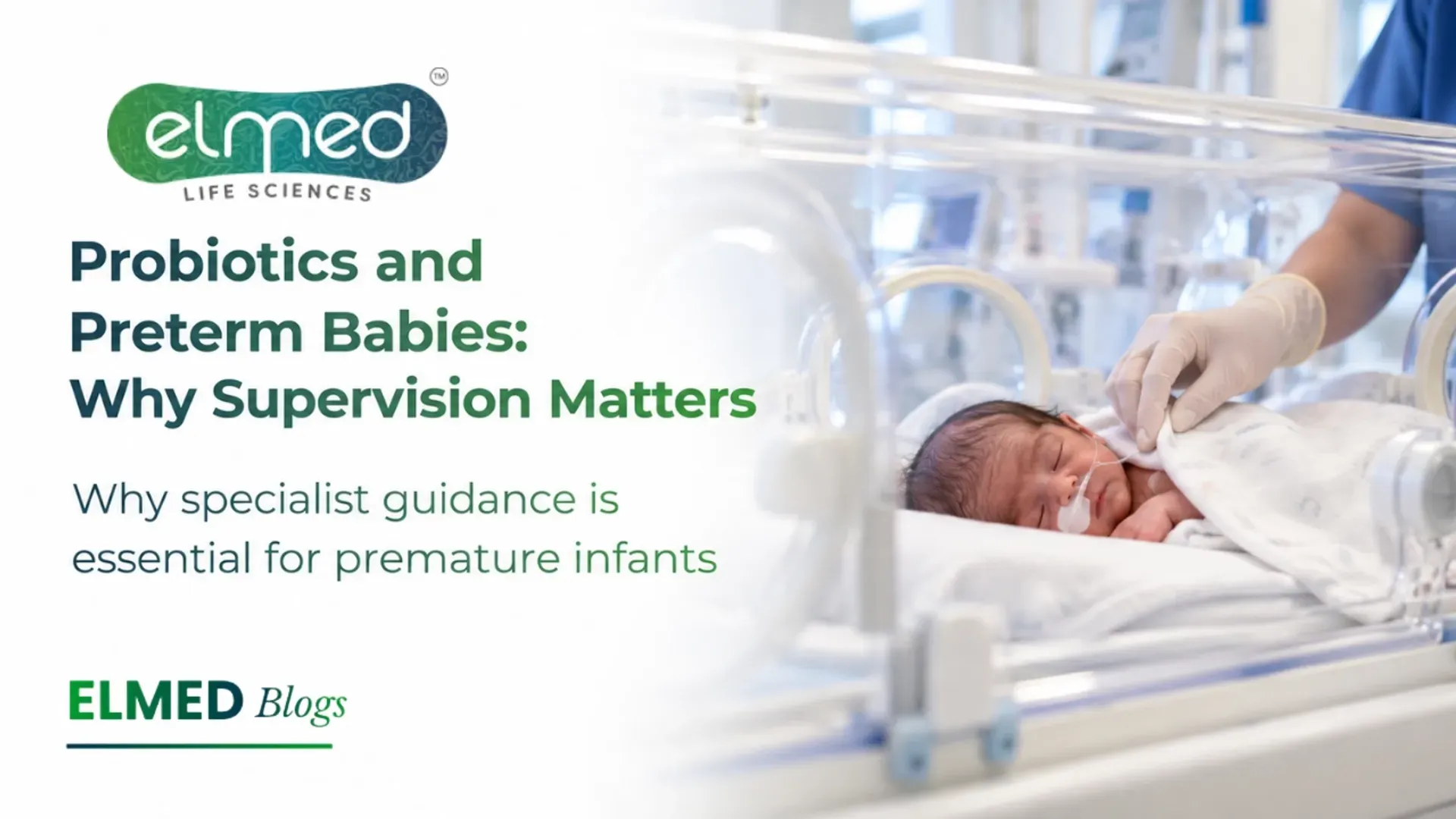


Probiotics given to preterm babies in neonatal intensive care may reduce the risk of necrotising enterocolitis, a serious bowel disease of premature infants. The same tiny, immature patients are also the most vulnerable to infection from probiotic organisms. For this reason, probiotics for preterm babies are given only under neonatal unit protocols, never started at home.
What is necrotising enterocolitis?
Necrotising enterocolitis (NEC) is an inflammatory disease in which part of the bowel wall becomes damaged and can die. It mainly affects babies born very early or with very low birth weight, usually in the first weeks of life. Signs include a swollen abdomen, feeding intolerance, bloody stools and sudden illness. Severe cases need surgery, and NEC remains a significant cause of death and disability in preterm infants.
Its causes include an immature gut barrier, an underdeveloped immune response and an abnormal early microbiome. Preterm babies in intensive care are often colonised by hospital bacteria, have limited exposure to maternal microbes and frequently receive antibiotics.
Why were probiotics tested for NEC?
The rationale was to give the preterm gut beneficial bacteria it would otherwise lack. Dozens of randomised trials and several large meta-analyses have tested probiotics in preterm infants. Pooled results suggest that certain probiotics reduce NEC and death, with the clearest effects for some multi-strain combinations containing bifidobacteria.
Breast milk, especially the mother's own milk, remains the most effective preventive measure for NEC. Donor human milk is used when the mother's own milk is not available.
What do guidelines recommend?
Expert bodies have reached different conclusions from the same evidence.
In 2020, ESPGHAN published a position paper on probiotics for preterm infants. It gave conditional recommendations, based on low-certainty evidence, for a small number of specific products. One was Lactobacillus rhamnosus GG ATCC 53103. Another was a combination of Bifidobacterium infantis Bb-02, Bifidobacterium lactis Bb-12 and Streptococcus thermophilus TH-4. ESPGHAN advised against probiotics for which evidence was insufficient.
The American Academy of Pediatrics took a different view in a 2021 clinical report, which did not support routine probiotic use in preterm infants, particularly those under 1,000 grams, citing inconsistent evidence, quality concerns and safety issues.
Many neonatal units now decide locally, weighing their own NEC rates, the products available to them and their capacity to monitor.
What are the risks for preterm infants?
Preterm babies have thin gut walls, immature immunity and often central venous lines. These conditions allow probiotic bacteria to cross into the bloodstream more easily. Cases of bacteraemia, bacteria in the blood, caused by the administered probiotic strain have been confirmed by genetic sequencing in neonatal units.
In 2023, the US Food and Drug Administration warned against giving probiotic products to preterm infants in hospitals after a preterm baby died from an infection caused by a bacterium in a probiotic product. The FDA noted that no probiotic product is approved in the US as a drug for preterm infants.
Product quality adds a separate risk. Contamination with other microbes, or a mismatch between the labelled and actual strain, matters far more in a 700-gram baby than in a healthy toddler.
How do neonatal units manage probiotic use?
Units that use probiotics follow written protocols covering the choice of product, verified strain identity, dose, preparation in a controlled area, criteria for starting and stopping, and surveillance for infection. Doses are prepared separately from other feeds and medicines, and staff watch for cross-contamination to other babies.
What should parents of a preterm baby do?
Parents should not give any probiotic product to a preterm baby, in hospital or after discharge, without the neonatal team's direction. Consumer probiotic drops, including LGG products such as Rhambac® GG Drops, are designed for healthy infants and children under general medical advice. Once a preterm baby has been discharged and is growing well, the paediatrician can advise whether a probiotic has any role. The guide to LGG probiotic drops for infants and children covers general use, and is LGG safe for newborns and infants explains the safety evidence in term babies.
Seek urgent care if a preterm baby at home develops a swollen abdomen, green vomiting, blood in the stool, poor feeding, fever or unusual sleepiness.
Frequently Asked Questions
Explore More Articles
 Guide
Antibiotics and Your Pet's Gut: Where Probiotics Fit
How antibiotics disturb a dog's or cat's gut bacteria, why finishing the course still matters, what research says about probiotics during and after treatment, and how to space doses safely.
 Guide
How to Give a Probiotic Sachet to Your Dog or Cat
Practical steps for giving a probiotic sachet to a dog or cat: what to mix it with, how to handle fussy eaters, multi-pet homes, storage, timing with meals and medicines, and mistakes to avoid.
 Guide
Dog Diarrhoea: Causes, Home Care and When to Call the Vet
Why dogs get diarrhoea, how to tell small bowel from large bowel signs, what home care is reasonable, which human medicines are dangerous and which symptoms mean an urgent vet visit.
Stay in the Loop
Get the latest probiotic industry insights delivered to your inbox.