Probiotics and Seasonal Colds in Preschoolers: What the Daycare Trial Found
A careful reading of the six-month daycare trial of Lactobacillus acidophilus NCFM and Bifidobacterium lactis Bi-07 in 326 pre-school children: results, limits and what parents should take from it.
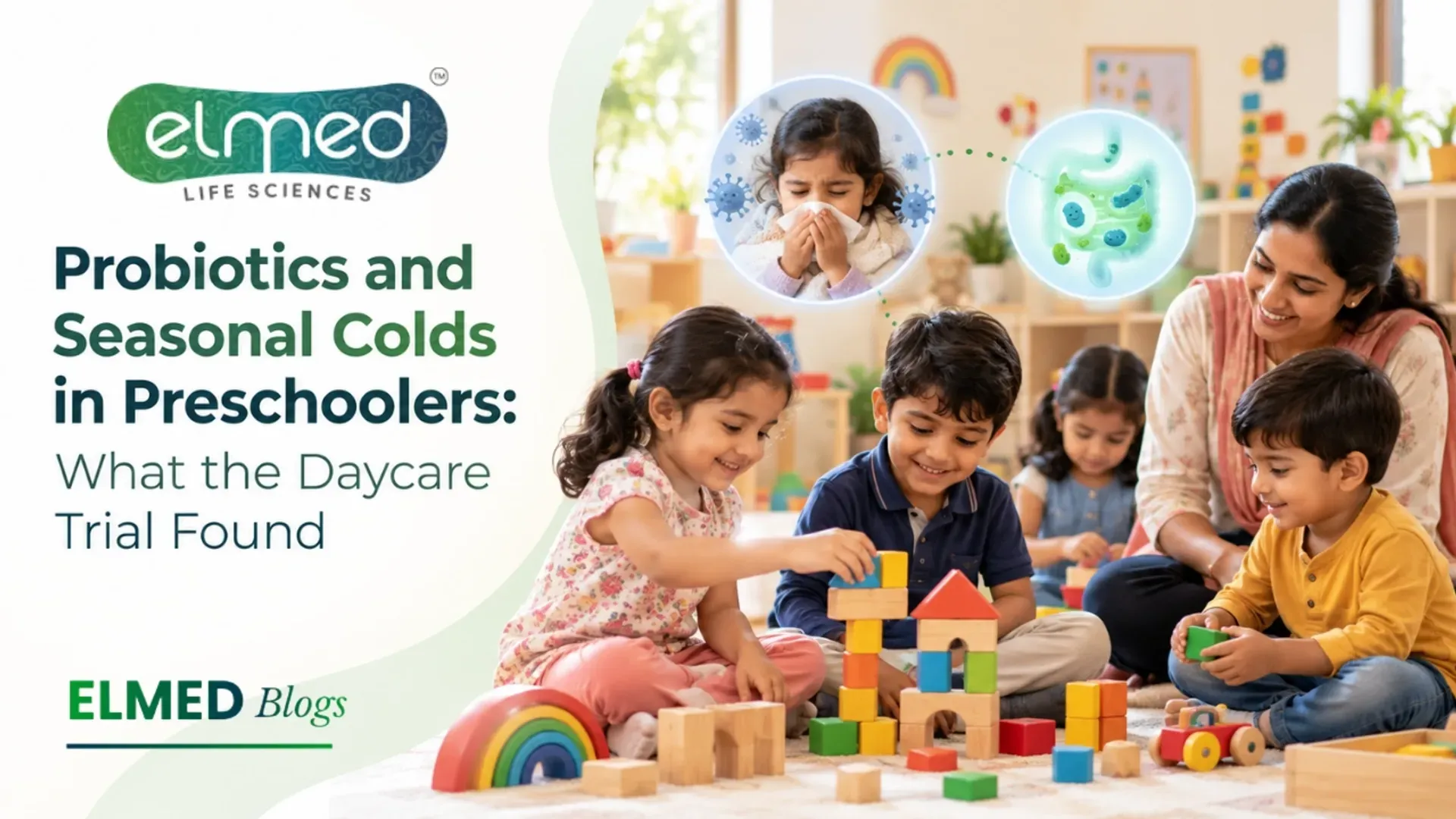


A 2009 randomised trial in 326 children aged 3 to 5 years at a Chinese childcare centre tested Lactobacillus acidophilus NCFM alone and combined with Bifidobacterium lactis Bi-07 over six winter months. Both probiotic groups had fewer reported fever, cough and runny nose episodes than the placebo group, and the combination performed better. The study was single-site and industry supported, so it needs replication.
Why are preschoolers so prone to colds?
Children aged 3 to 5 meet many respiratory viruses for the first time. Group care adds close contact, shared toys and frequent hand-to-mouth contact. Six to eight colds a year are common, and attendance at childcare raises that number. Most colds resolve in about a week without treatment, but they cause missed days for children and parents.
How was the trial built?
The trial was published in Pediatrics in 2009 by Leyer and colleagues. It was randomised, double-blind and placebo-controlled, meaning neither staff nor families knew which product a child received.
Children were assigned to three groups: NCFM alone, NCFM plus Bi-07, or placebo. The probiotics were given twice daily, for around 10 billion CFU a day, throughout six months in the winter. The researchers recorded symptoms, antibiotic use and missed days of childcare.
What were the main results?
Compared with placebo, the reported reductions in the incidence rate were as follows.
Fever. About 53 percent lower with NCFM alone and 73 percent lower with the combination.
Cough. About 41 percent lower with NCFM alone and 62 percent lower with the combination.
Runny nose. About 28 percent lower with NCFM alone and 59 percent lower with the combination.
Antibiotic use and absence from childcare were also lower in both probiotic groups. The pattern, with the combination outperforming the single strain, is the reason the two-strain pairing is of interest.
Why should these numbers be read with caution?
Several features limit how far the findings extend.
One site. All children came from one childcare centre. Local infection patterns, hygiene and diets may differ elsewhere.
Symptom reports. Outcomes were based on recorded symptoms, which are less objective than laboratory-confirmed infections.
Sponsorship. The strain's commercial developer supported the work. This does not make the results wrong, but independent replication gives more confidence.
Large effects. Very large relative reductions in small studies often shrink when repeated. Systematic reviews of probiotics for respiratory infections generally find smaller effects and rate the evidence as low certainty.
What have other studies found?
Other probiotics, including Lacticaseibacillus rhamnosus GG and Bifidobacterium lactis BB-12, have also been tested in childcare settings, with some trials reporting fewer or shorter infections. Findings are inconsistent across strains and populations. A review that pools the data suggests a modest benefit on average, with variation between products.
This is why strain-specific evidence matters. A trial of NCFM and Bi-07 speaks to these strains, not to probiotics in general.
What should parents take from it?
First, a probiotic with documented strain evidence is a reasonable supportive option in some children, after discussion with a paediatrician. Second, expectations should be realistic. The goal is possibly fewer or milder episodes, not an end to colds. Third, the basics still do the heavy lifting: hand washing, vaccination, sleep, a varied diet and keeping sick children home.
Which questions remain open?
Several practical questions are unanswered. It is unclear whether the effect holds in children who do not attend childcare, in other countries, or in older school-age children . The best duration and dose are not established, and it is unknown how much of the benefit depended on the combination being given twice daily. Trials that measure laboratory-confirmed infections, not parent-reported symptoms, would also add certainty.
How does this relate to Little One's?
Little One's from ELMED Life Sciences contains NCFM and Bi-07 at 10 billion CFU per sachet, which is the same order as the daily amount in the trial. The trial split the dose over two administrations and used its own formulation, so it supports interest in the strains, not a claim about any one product. The full background is in the guide to probiotic sachets for children.
Frequently Asked Questions
Explore More Articles
 Science
Prebiotics, FOS and Digestive Enzymes in Pet Supplements
What FOS, other prebiotics and digestive enzymes do in dog and cat supplements, how much evidence there is, which pets need enzymes for medical reasons and what B vitamins add.
 Science
LGG Pili and Mucus Binding: How the Strain Attaches
How Lactobacillus rhamnosus GG attaches to gut mucus using SpaCBA pili, what the laboratory studies show, why attachment is only part of the story and what it does not prove.
 Science
LGG and Eczema Prevention: What the Finnish Trials Show
What the Finnish trials of Lactobacillus rhamnosus GG found for eczema prevention in at-risk infants, how the benefit held at two and four years, and why guidelines remain cautious.
Stay in the Loop
Get the latest probiotic industry insights delivered to your inbox.